
the good page
this episode:
katja pudor
calligraphic performer
traces’n’spaces
2026

© katja pudor
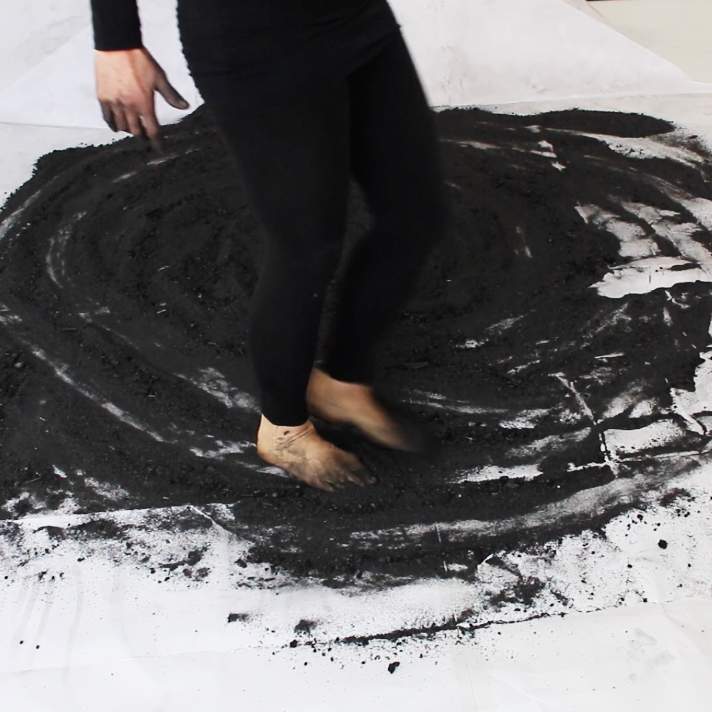
when a figure in motion leaves behind in space traces of those very lines that the body flowing through three-dimensionality intends to set, this process in itself is not necessarily rhythmized. if one adds to this performative situation a beat-giving sound carrier, an emotional one even, the expected result is the transformation of a tonal medium, translated through a corporeal one into a pictorial one. once the performance is over, the three levels separate again into their respective materializations – the ligeti piece on vinyl returns to the record collection, katja pudor cleanses head and body, and we regard the respective result, framed behind glass or freely hanging on the wall within an art-historically relevant context.
what the museological presentation does not convey, what the perfectly illuminated photograph of the action cannot discuss, and what the final artistically modified sheet cannot convey either, is the moment of the act itself, the interplay of so many incoming impulses, and we repeatedly gaze in wonder at the footprint of the man on the moon … only metaphorically, of course, for our neural chaining can do no other than attempt to extract from the palladium-print photograph the moment in which the million-dollar moon boot is pulled from the dust, and this one small step, so great indeed for mankind, stands for so much more than merely an imprint in the dirt.
we circle around the central core and paradox of performance and action art, as well as documentary photography in general. the transition from the synesthetic, flowing event, the fusion therefore of ligeti’s composition, katja pudor’s physicality and space-time into a static object as an ultimately framed trace or photographic print simultaneously depicts a loss. documented transience nevertheless draws us into its spell with seductive patience, and the multilayered psychological and art-theoretical mechanisms behind it describe a fascinating logic.
roland barthes describes the magic of indexicality, the „that-has-been,“ as a compelling concept of photography – the footprint on the moon or the graphite trace on paper are not mere representations; they are indices and direct physical testimony of a real touch. they are physical proof of the knowledge that the moon boot displaces this lunar dust just as the artist’s hand exerts precisely this pressure upon the paper. the corresponding document functions as an umbilical cord to the past, a tactile proof of the existence of a moment that has irretrievably passed. the simultaneity of radical absence and certified presence generates an irresolvable tension.
precisely because the relic in question cannot reproduce the rushing of blood, the exhaustion of the artist, or the absolute silence of outer space, it becomes a focused occasion for inner reconstruction. the viewer becomes a co-creator; the static image, respectively the line left behind, is not the conclusion of a work but rather a score for our perception, one that our brain continues to write because it does not tolerate a vacuum. our neural chaining must virtually pull the moon boot out of the dust itself; the document before us is both permission and incentive to mentally re-enact that moment again and again. in a compression of time and space, the trace left behind condenses a processual, time-based event into absolute simultaneity.
the fleeting moment is torn from the flow of time, frozen, and we observe not merely a step in the dirt but the monumental metaphor of human advancement, compressed into a single, silent relief. the palladium print of the trace left upon the satellite is the ultimate monument to transience and the distillate of emotionally historical force. was pudor on the moon? yes … no … perhaps? perhaps indeed? does it matter? in the search for a more precise metaphor for the act of creation, the forensic investigator encounters the pure viewer of art – the viewer’s subjectively emotional truth redefines the context of the event. the magic of this trace as a forged document and wholly malicious staging of a politically indispensable moon landing allows us to postulate one thing with certainty … armstrong may never have left the earth, but katja pudor, she most certainly draws her lines in erfurt, and that is already half the battle.
iir, june 2026
Wenn eine Figur in Bewegung Spuren eben jener Linien im Raum hinterlässt, die der im Dreidimensionalen fließende Körper zu setzen gedenkt, ist dieser Vorgang an sich nicht zwingend rhythmisiert. Addiert man dieser performativen Situation einen taktgebenden Tonträger hinzu, einen emotionalen gar, ist das zu erwartende Ergebnis die Transformation des eines tonalen Mediums, übersetzt durch ein körperliches solches in ein bildnerisches. Ist die Performance zu Ende trennen sich die drei Ebenen wieder in ihrer jeweiligen Materialisierung – das Ligeti Stück auf Vinyl wandert zurück in die Plattensammlung, Katja Pudor reinigt Kopf und Körper und das jeweilige Ergebnis betrachten wir, gerahmt hinter Glas oder freihängend an der Wand in einem kunsthistorisch relevanten Kontext.
Was die museale Präsentation nicht vermittelt, das perfekt ausgeleuchtete Photo der Aktion nicht erörtern kann und das schlussendliche, künstlerisch modifizierte Blatt ebensowenig, ist der Moment der Tat an sich, das Zusammenwirken so vieler einfließender Impulse und wir betrachten immer wieder staunend den Fußabdruck des Mannes auf dem Mond … übertragen natürlich nur, denn unsere neuronale Verkettung kann gar nicht anders, als der als Palladium Druck ausgeführten Photographie den Moment entlocken zu wollen, in dem der millionenschwere Mondschuh aus dem Staub gezogen wird, und dieser eine kleine Schritt, so groß allerdings für die Menschheit für so viel mehr steht, als nur einen Abdruck im Dreck.
Wir umschleichen den zentralen Kern und Paradox der Performance- und Aktionskunst, sowie dokumentarischer Fotografie im Allgemeinen. Der Übergang vom synästhetischen, fließenden Ereignis, der Verschmelzung also von Ligetis Komposition, Katja Pudors Physis und der Raumzeit zu einem statischen Objekt als schlussendlich gerahmte Spur oder Fotoabzug bildet gleichzeitig einen Verlust ab. Dokumentierte Vergänglichkeit zieht uns dennoch mit verführerischer Geduld in ihren Bann und die vielschichtigen, psychologischen und kunsttheoretischen Mechanismen dahinter beschreiben eine faszinierende Logik.
Roland Barthes beschreibt die Magie der Indexikalität, das „Es-ist-so-gewesen“ als zwingendes Konzept der Fotografie – Der Fußabdruck auf dem Mond oder die Grafitspur auf dem Papier sind keine reinen Repräsentationen, sie sind Indices und direkte physische Bezeugung einer realen Berührung. Sie sind physischer Beweis um das Wissen, dass der Mondschuh diesen lunar Staub verdrängt so wie, dass die Hand der Künstlerin genau diesen Druck auf das Papier ausübt. Das entsprechende Dokument fungiert als Nabelschnur zur Vergangenheit, ist haptischer Beweis für die Existenz eines Moments, der unwiederbringlich vergangen ist. Die Gleichzeitigkeit radikaler Abwesenheit und verbriefter Präsenz erzeugt unauflösbare Spannung.
Gerade weil das betreffende Relikt das Rauschen des Blutes, die Erschöpfung der Künstlerin oder die absolute Stille des Weltraums nicht wiedergeben kann, ist es fokussierter Anlass zur inneren Rekonstruktion. Der Betrachter wird zum Co-Kreateur, das statische Bild respektive die hinterlassene Linie ist nicht Abschluss eines Werkes, sondern vielmehr eine Partitur für unsere Wahrnehmung die unser Gehirn fortschreibt, da es Vakuum nicht duldet. Unsere neuronale Verkettung muss den Mondschuh förmlich mit aus dem Staub ziehen, das entsprechend vorliegende Dokument ist Erlaubnis und Anreiz zugleich diesen Moment wieder und wieder mental neu aufzuführen. In einer Kompression von Zeit und Raum verdichtet die hinterlassene Spur einen prozessual zeitbasierten Vorgang in absolute Gleichzeitigkeit.
Der flüchtige Moment wird dem Fluss der Zeit entrissen, eingefroren und wir betrachten nicht nur einen Schritt im Dreck, sondern die monumentale Metapher menschlichen Voranschreitens, komprimiert in ein einziges, stilles Relief. Der Palladium-Druck der Hinterlassenschaft auf dem Trabanten ist ultimatives Denkmal von Vergänglichkeit und Destillat emotional historischer Wucht. Die Pudor war auf dem Mond? Ja … nein …. vielleicht? Vielleicht doch? Ist das wichtig? Auf der Suche nach einer präziseren Metapher für den Schaffensakt trifft der Forensiker auf den reinen Kunstbetrachter – die subjektiv emotionale Wahrheit des Betrachters definiert den Kontext des Geschehens neu. Die Magie dieser Spur als gefälschtes Dokument und gänzlich boshafte Inszenierung einer politisch hochnotwendigen Mondlandung lässt uns eines mit Sicherheit postulieren … der Armstrong mag ja die Erde nie verlassen haben, Katja Pudor allerdings, die hat ihre Linien in Erfurt ganz bestimmt gezogen und das ist doch schon mal die halbe Miete.
iir, june 2026
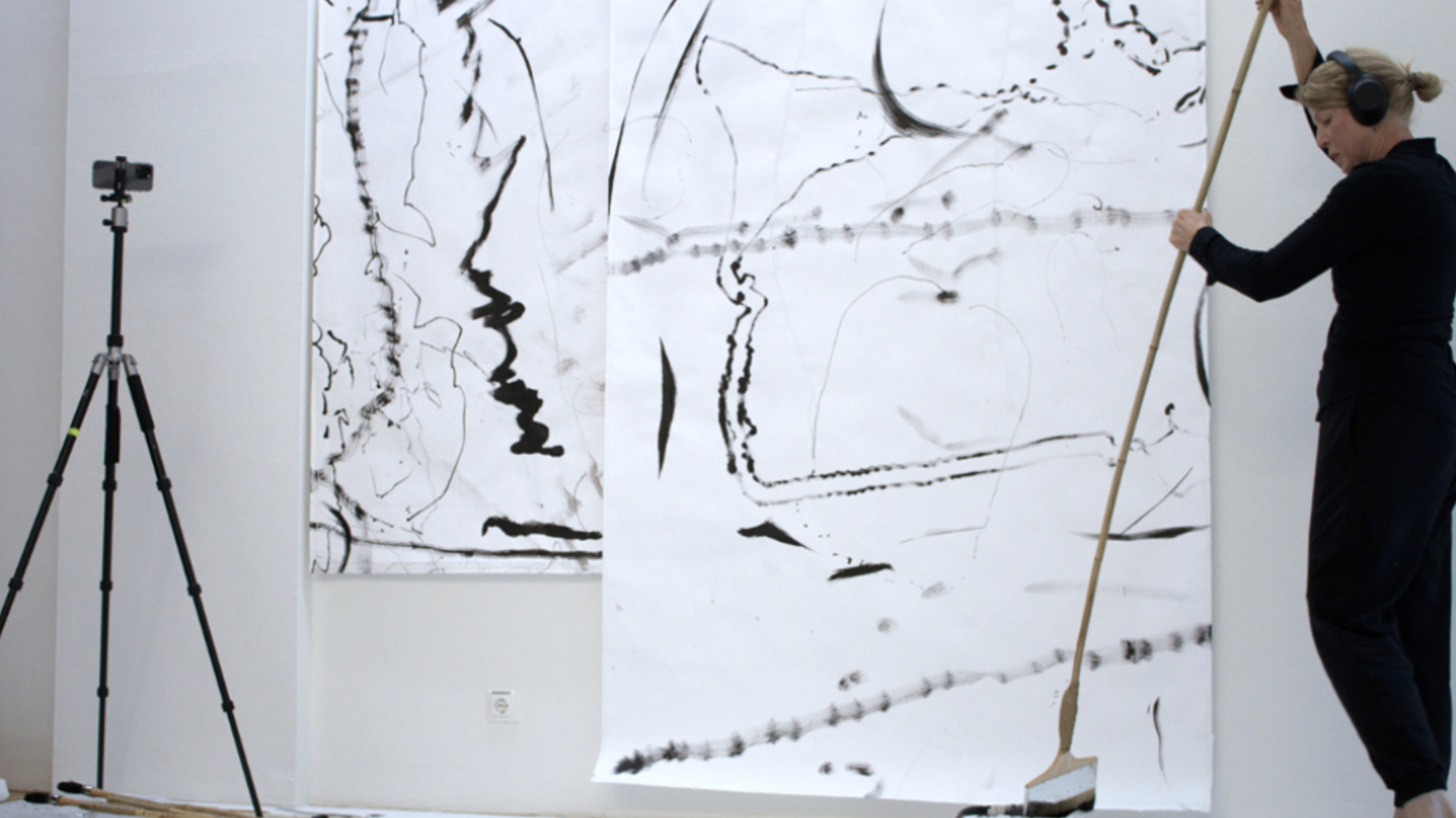
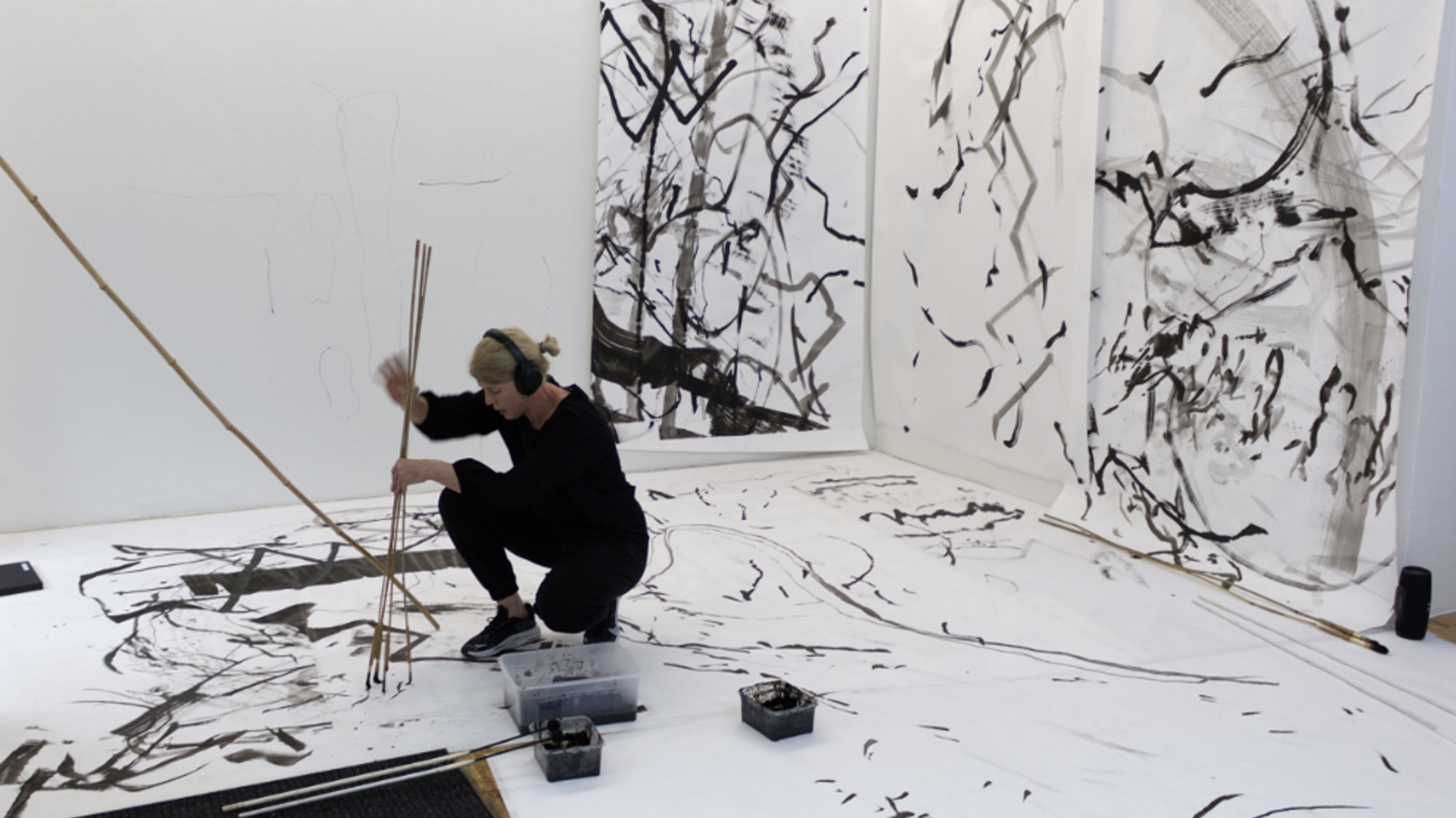
© katja pudor
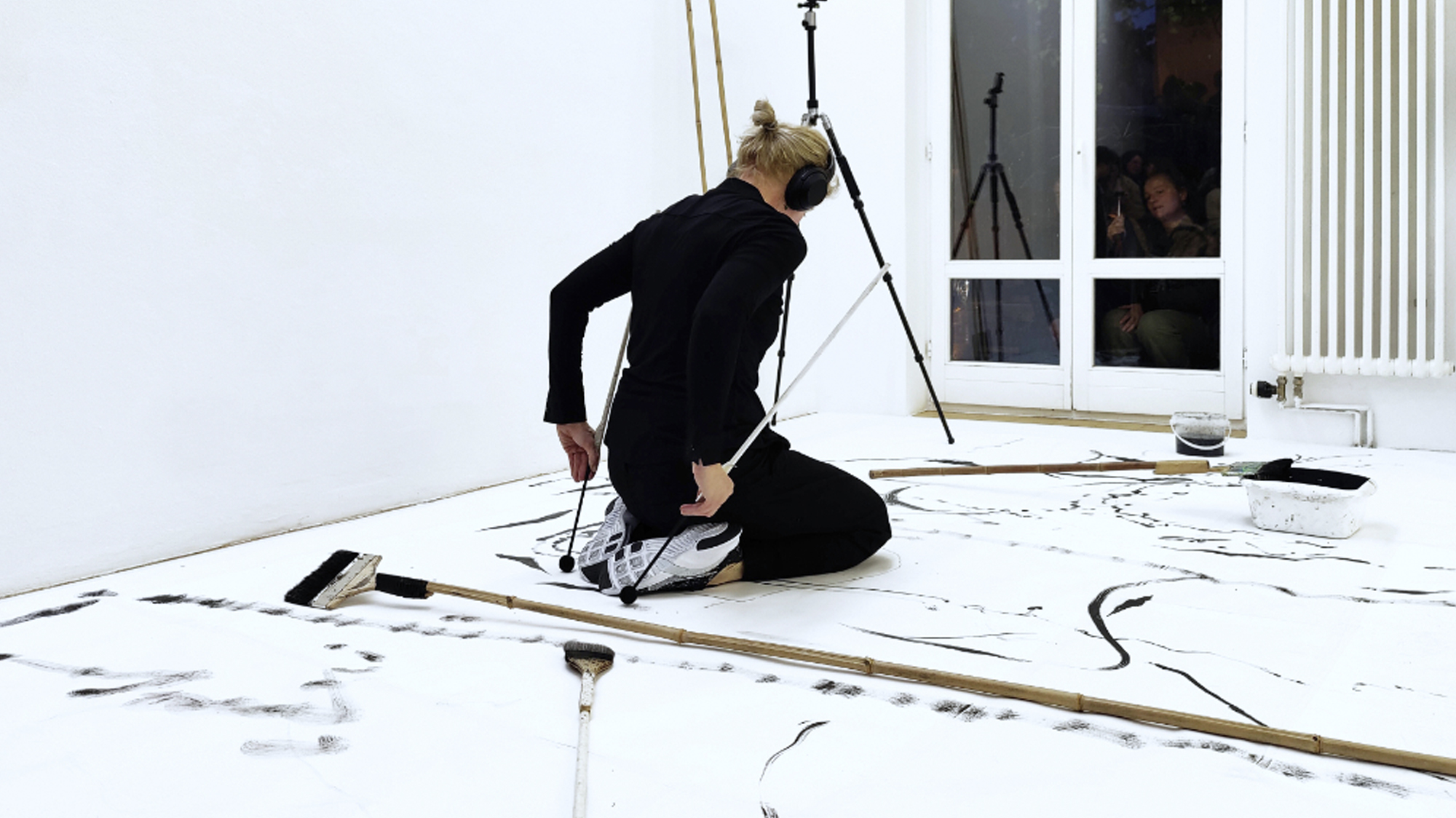
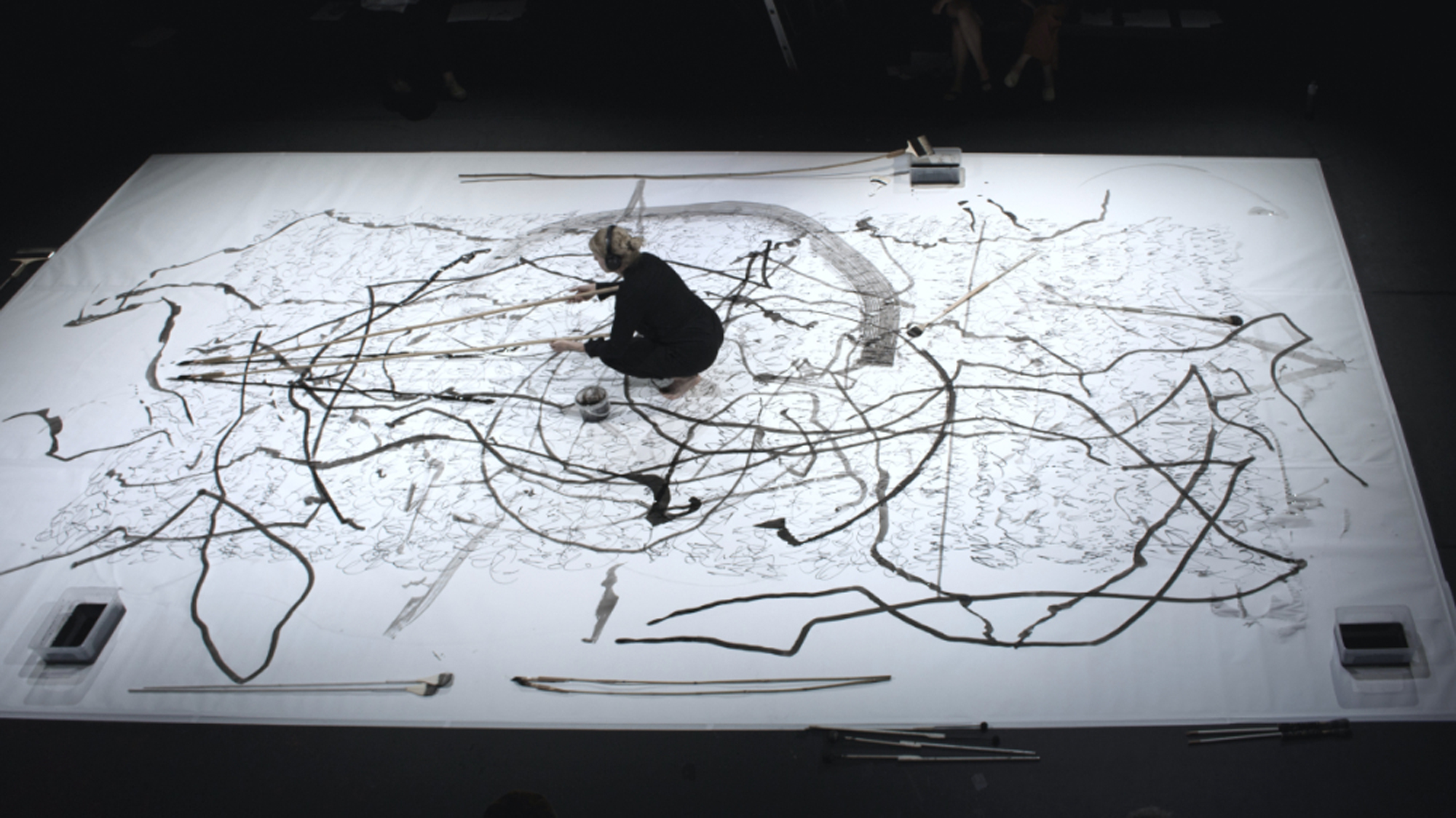
about hearing and listening and the possible actions that follow
five-part performance series on the occasion
of the exhibition gerade, die linie!
at kunsthaus erfurt & theater erfurt, 2023
—
part 01
@ kunsthaus erfurt, ink on paper, duration: 30 min
—
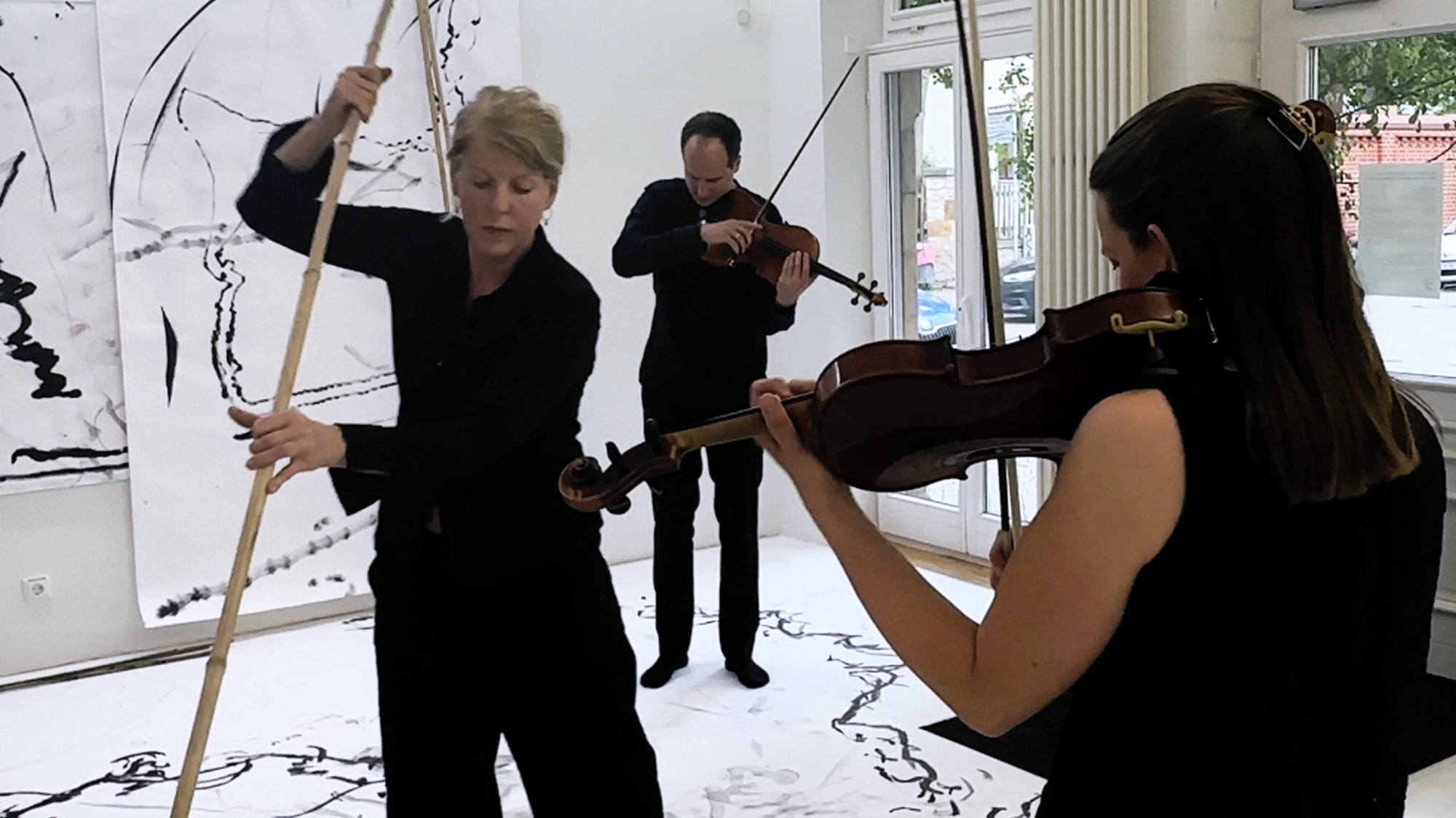
part 02
(with bergstrom-kollektiv) @ kunsthaus erfurt,
ink on paper, duration: 30 min,
starring – stephanie appelhans / violine, joachim kelber / viola, thomas lenders /
doublebass, kilian hartig / marimbaphone
—
part 03
@ studio.box | theater erfurt, ink on paper, duration 1:25 h, including compositions
of barbara monk feldman / soft horizons, steve reich / piano phase
& caroline shaw | partita for 8 voices
—
part 04
@ kunsthaus erfurt, ink on paper, duration: 30 min
—
part 05
@ kunsthaus erfurt, ink on paper, duration: 30 min
—