

maurizio cattelan
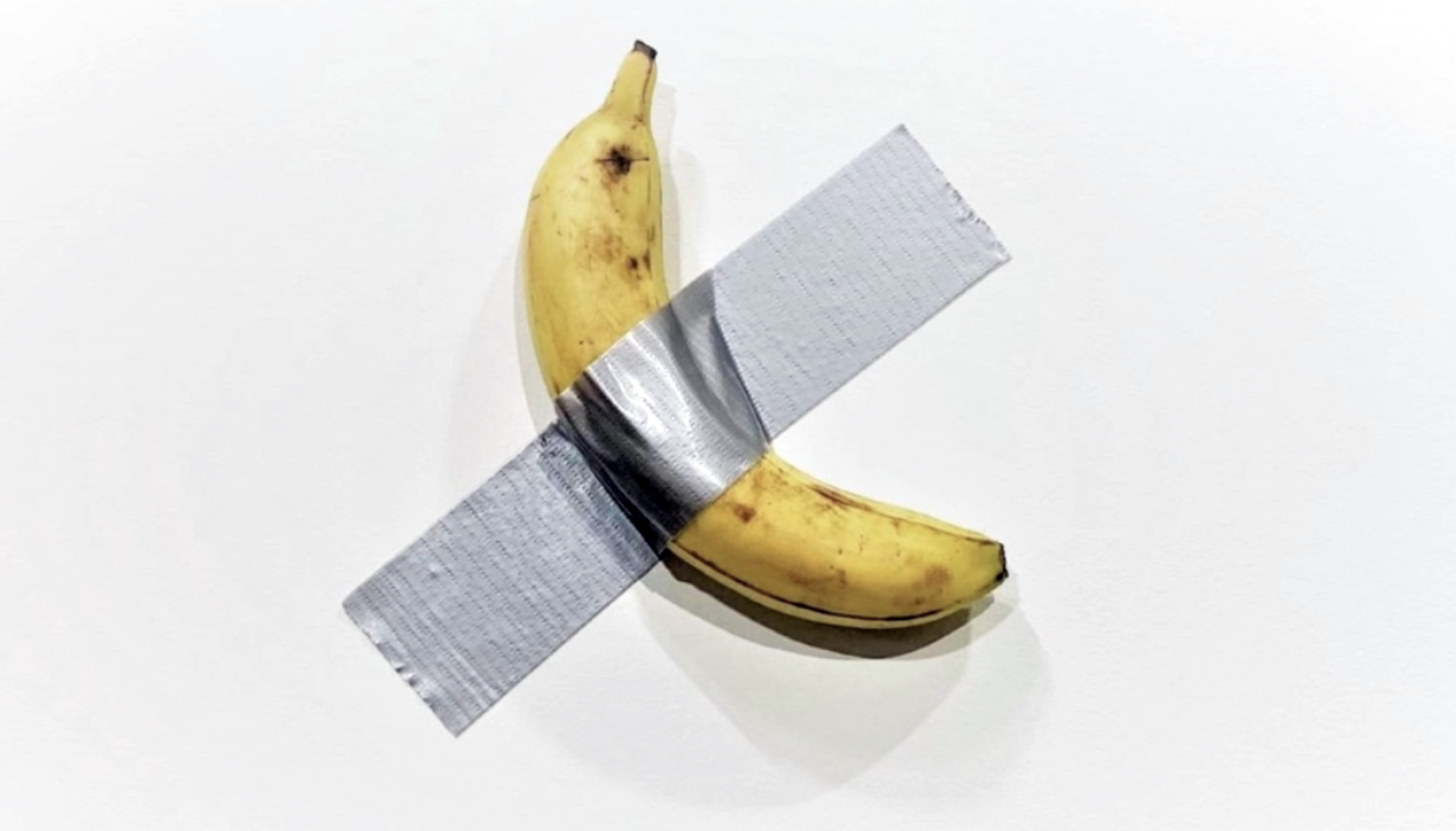
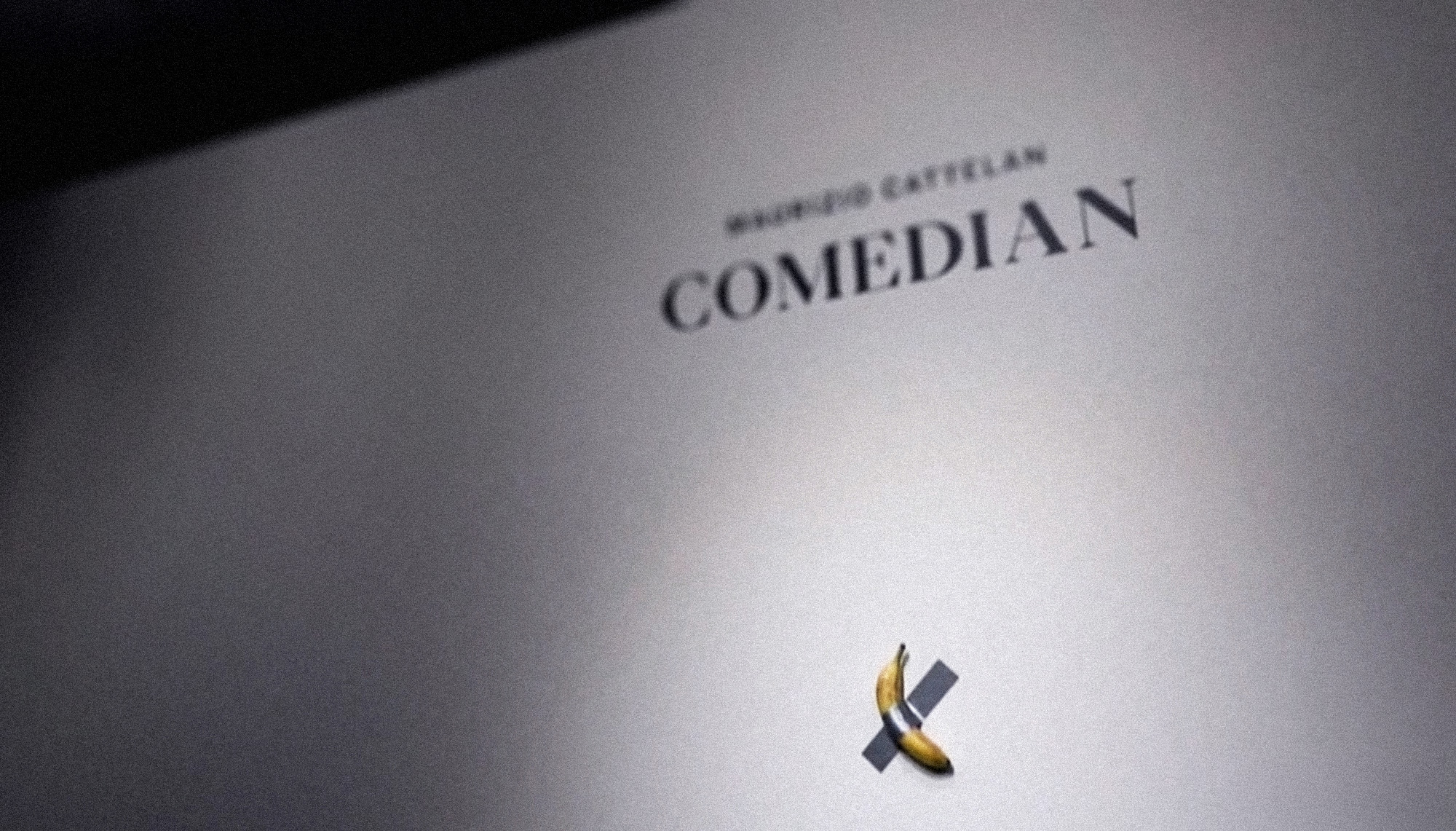
comedian, 2019
banana, tape & warrant
while the others are dancing,
martin eugen raabenstein’s
sensor spotlight focuses on:
© maurizio cattelan, 2019
banana, tape, sotheby’s, 6.2 million dollars, china… that’s what you call a happy end in the year 2024. the concept, first presented in 2019, is widely regarded as one of the most provocative works of contemporary art – that is very, very funny. either the author of such a mental bredouille truly has no clue about art or its history, or his memory cache only allows a very short-interval glimpse into the contemporary. perhaps one should again invest more money in education, but certain generations educate themselves sufficiently, or at least they believe they do. bananas are excellent “brainfood”, promoting concentration, boosting thinking speed and acting as positive mood carriers. their sugar delivers fast and sustained energy, along with vitamin b6, magnesium, dopamine, and promotes the release of the happiness hormone serotonin. slightly unripe bananas also contain prebiotics, vitamin c and antioxidants. that sounds healthy and anything but provocative. bananas are already known to ancient rome, albeit only as exotica – it is not until the late 1st century ad that emperor vespasian introduces state-funded salaries for rhetoric teachers. the invading barbarians put a prompt end to this promotion of education in the fifth century, and in the middle ages education is reserved almost exclusively for the clergy and the nobility.
with the renaissance, an economically powerful bourgeoisie takes shape, for whom comprehensive education, languages, natural sciences and art become a status symbol and the basis for social advancement. the new educational ideals promote critical and secular thinking above all among the urban elites. in place of the strictly ecclesiastical scholarship of the middle ages, the privileged human being now moves to the centre as a self-reliant, creative individual. education aims at the free development of personality, and through johannes gutenberg’s invention of the printing press around 1450, writings and books are produced in large quantities and become affordable for a greater majority, leading in turn to a significantly improved dissemination of knowledge and general reading competence. the banana slides temporarily entirely out of focus in this context, and it is only the object artist daniel spoerri who begins experimenting with real food from 1960 onwards, later presenting this as “eat art”. on his fallenbilder, the artist fixes leftovers from shared meals along with plates, cutlery and glasses to the tabletop and hangs these remains of horizontal everyday scenery vertically on the wall.
another specialist occupies himself intensively with foodstuffs: dieter roth incorporates the natural process of decay of slices of sausage, chocolate or spices into his art objects. now follows a small leap to thomas rentmeister, who in 1999 begins using real foodstuffs as sculptural material by coating a simple plastic shelf with nutella. from there to the detachable banana is only a further conceptual step, and cattelan is wise enough to exploit an entire chapter of art-historical food fascination for himself. the banana attached with adhesive tape perishes and must be replaced. buyers of the work acquire, along with the fruit and the tape, a certificate of authenticity as well as detailed instructions from the artist for its attachment – what is sold is the idea and the right to renew the installation independently. cattelan’s work is a coveted target of spontaneous hunger: a performance artist summarily declares the consumption of the banana an independent action, and even the centre pompidou in metz cannot prevent the pilfering by a person who remains unknown. the chinese buyer, now poorer by a few million, likewise cannot resist, and the world keeps turning regardless, even without a proper ruling on how the yellow fruit is to be handled.
iir, june 2026
Banane, Tape, Sotheby’s, 6,2 Millionen Dollar, China… das nennt man ein Happy End im Jahre 2024. Das 2019 erstmals präsentierte Konzept wird gerne als eine der provokantesten Arbeiten der Gegenwartskunst angesehen, das ist sehr, sehr lustig. Entweder der Verfasser einer solchen mentalen Bredouille hat nun wirklich keinen Schimmer von Kunst respektive derer Geschichte, oder sein Erinnerungscache lässt nur einen sehr kurz getackteten Einblick in Zeitgenössisches zu. Vielleicht sollte man hier wieder verstärkt Geld in die Bildung stecken, aber gewisse Generationen bilden sich ausreichend selbst, zumindest bilden sie sich dieses ein. Bananen sind hervorragendes „Brainfood”, fördern die Konzentration, steigern die Denkgeschwindigkeit und sind positive Stimmungsträger. Ihr Zucker liefert schnelle und konstante Energie, so auch Vitamin B6, Magnesium, Dopamin und fördert die Ausschüttung des Glückshormons Serotonin. Leicht unreife Bananen enthalten zudem Präbiotika, Vitamin C und Antioxidantien. Das klingt gesund und alles andere als provokant. Schon dem alten Rom sind Bananen bekannt, allerdings nur als Exotica – erst im späten 1. Jahrhundert n. Chr. führt Kaiser Vespasian aus der Staatskasse zu finanzierende Gehälter für Rhetoriklehrer ein. Die einfallenden Barbaren setzen dieser Bildungsförderung im fünften Jahrhundert ein promptes Ende, und im Mittelalter ist Bildung fast ausschließlich dem Klerus und dem Adel vorbehalten.
Mit der Renaissance formt sich ein wirtschaftlich starkes Bürgertum heraus, für das umfassende Bildung, Sprachen, Naturwissenschaften und Kunst zum Statussymbol und zur Grundlage für gesellschaftlichen Aufstieg werden. Die neuen Bildungsideale fördern vor allem in den städtischen Eliten kritisches und weltliches Denken. Anstelle der streng kirchlich geprägten Gelehrsamkeit des Mittelalters tritt der privilegierte Mensch nun als selbstständig demnkendes, schöpferisches Individuum in den Mittelpunkt. Bildung zielt auf die freie Entfaltung der Persönlichkeit ab, und durch Johannes Gutenbergs Erfindung des Buchdrucks um 1450 werden Schriften und Bücher in großen Stückzahlen für eine größere Mehrheit erschwinglich, was in der Folge zu einer deutlich verbesserten Wissensverbreitung und allgemeinen Lesekompetenz führt. Die Banane rutscht in diesem Zusammenhang zeitweilig völlig aus dem Fokus, und erst der Objektkünstler Daniel Spoerri beginnt ab 1960 mit echtem Essen zu experimentieren und dies später als „Eat Art” zu präsentieren. Auf seinen Fallenbildern fixiert der Künstler Essensreste von gemeinsamen Mahlzeiten sowie Teller, Besteck und Gläser auf der Tischplatte und hängt diese Überbleibsel horizontaler Alltagsszenerie vertikal an die Wand.
Ein weiterer Spezialist beschäftigt sich intensiv mit Nahrungsmitteln: Dieter Roth bezieht den natürlichen Verfallsprozess von Wurstscheiben, Schokolade oder Gewürzen in seine Kunstobjekte mit ein. Jetzt folgt ein kleiner Sprung zu Thomas Rentmeister, der 1999 beginnt, echte Lebensmittel als Bildhauermaterial zu nutzen, indem er ein einfaches Plastikregal mit Nutella bestreicht. Von da hin zur abnehmbaren Banane ist es nur ein weiterer gedanklicher Schritt, und Cattelan ist weise genug, ein ganzes Kapitel kunstgeschichtlicher Nahrungsmittelfaszination für sich auszuschlachten. Die mit Tape angebrachte Banane verdirbt und muss ausgetauscht werden. Käufer des Werks erwerben zusammen mit der Frucht und dem Klebeband ein Echtheitszertifikat sowie eine detaillierte Anleitung des Künstlers zu deren Anbringung – veräußert wird die Idee und das Recht, die Installation selbstständig zu erneuern. Cattelans Werk ist begehrtes Zielobjekt spontanen Hungerbefalls: Ein Performance-Künstler benennt die Bananenverspeisung kurzerhand als eigenständige Aktion, und selbst das Centre Pompidou in Metz kann den Mundraub eines unbekannt Bleibenden nicht verhindern. Der chinesische Käufer, nun um ein paar Millionen ärmer, kann es ebenfalls nicht lassen, und die Welt dreht sich dennoch weiter, auch ohne ordentliche Regelung, wie mit der gelben Frucht umzugehen sei.
iir, june 2026
© maurizio cattelan, 2024