
florentina holzinger
orphelia’s got talent
multidisciplinary ensemble production
#21
the 21st episode of your chair, your choice… is presented by artist elana katz. she recommends the production orphelia got talent by austrian choreographer & performance artist florentina holzinger, for its maddness & strength you didn’t know is there, but it’s been there the whole time (in you), it is hitting all the high points, all the frequencies, and in no order, with no way to explain, in the inevitable simplification of the medium of language …
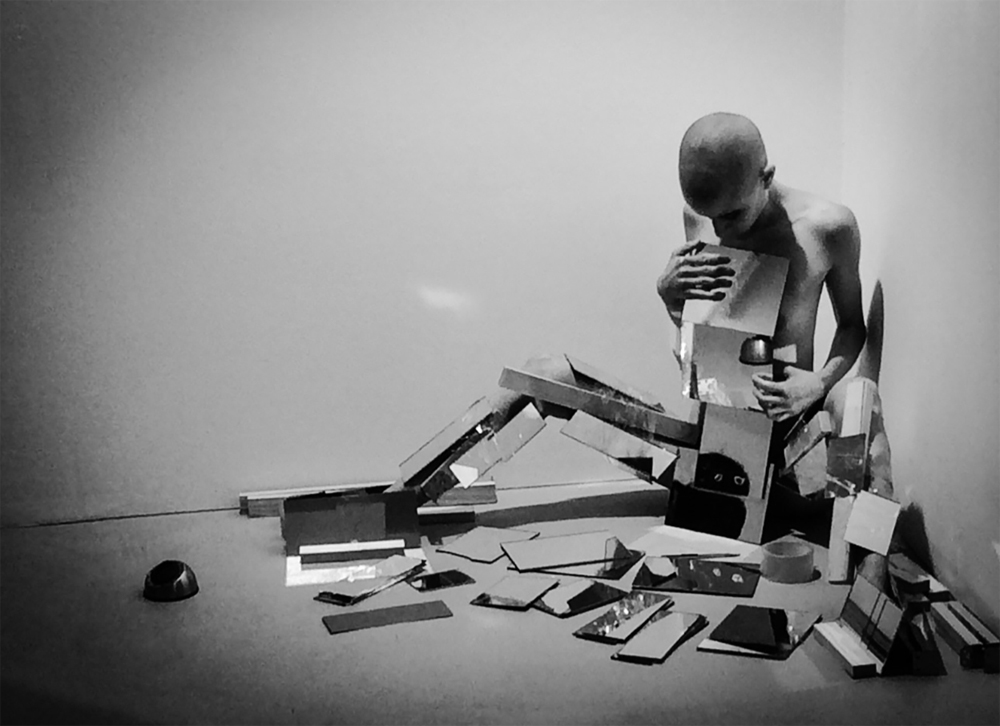
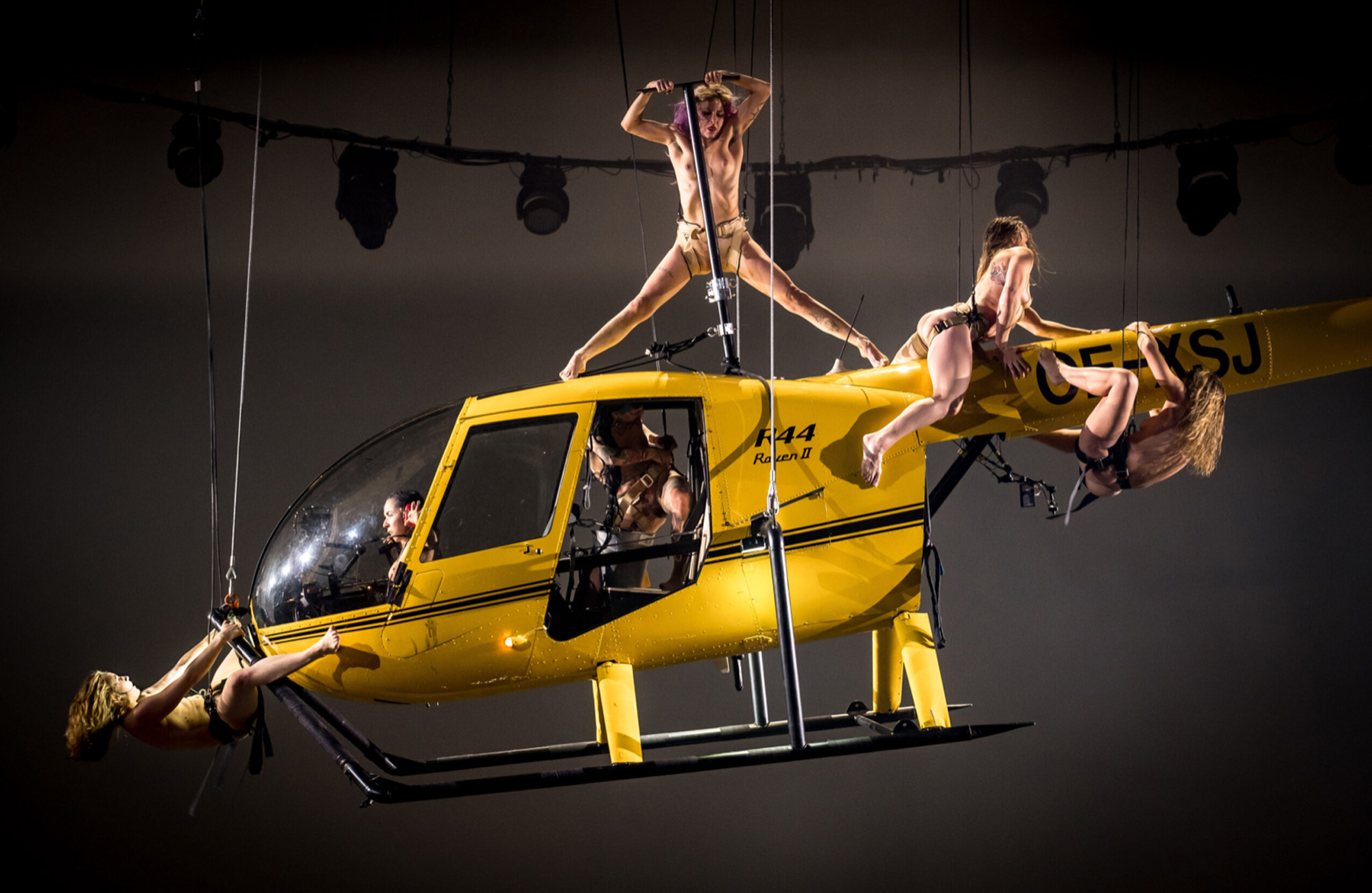
© gordon welters / laif
the empowering ophelia myth is largely an invention of reception history, not of the text itself. in shakespeare’s hamlet, gertrude recounts her death in a poetically detached manner — ophelia sings, is pulled into the water by her dress, and seems not to notice. the dramaturgically ambivalent question of suicide, accident, or madness is left open by the author — ophelia is not present in her dying, remaining a narrative object spoken of by another character. the pre-raphaelite idealization produces the decisive shift: john everett millais’ painting of 1851–52 shows ophelia lying, floating among flowers, still, beautiful, and otherworldly. it is immensely influential and provides the iconic model for the passive and transfigured martyr. the artist elizabeth eleanor siddal poses for hours in a bathtub and catches a severe cold, as the painter, absorbed in his work, completely forgets to replace the candles meant to keep the water warm. each era uses ophelia as a flexible projection surface for its own ideas of femininity — hysteria shifts into romanticism, victimization becomes empowerment. ophelia is the figure who endures across time despite her erasure in the text, and her absence, silence, and death become a structural critique of a patriarchal world that silences women.
in another reading, madness remains the only form of agency. in a clear overcoding, a figure is rescued whom the text itself lets drift away, and here the central contradiction emerges: the empowering aspect is retroactively projected, not inherent in the text. ophelia has no voice over her death in the play — no farewell scene, no decision, no awareness — yet she leaves behind the destabilizing effect of her madness on the court, as a subversive, more unconscious disturbance rather than resistance. the myth lives from shakespeare’s omissions, and the gaps in the text allow for layers of projection that each generation fills differently. thus it is only consistent that florentina holzinger’s 2022 production ophelia’s got talent at the volksbühne treats hamlet merely as a peripheral outline. ophelia’s spiritual sisters — leda, melusine, and undine, as well as nymphs, nereids, or sirens — replace the mundane, skull-questioning dane, and with irrepressible playfulness on stage, the berlin theater audience is shown in a full-length, performatively fluid spectacle just how much can be done with water. in a mixture of extreme sport, freak show, and casting format, feminist deconstruction unfolds, performed exclusively by women and non-binary individuals of different ages and body types.
in the illusion of creating a genuine external space beyond patriarchal structures, while still operating within the same symbolic gender order, the act of opposition ultimately confirms the rule. patriarchy remains the hidden frame of reference. the ensemble, which reinterprets ophelia’s death wish as empowerment, remains trapped within the categorization that first turns ophelia into a drowned body. from a psychodynamic perspective, this radical counter-movement is reactance to experienced restriction, based on a reactive rather than autonomously developed logic. in the blending of high-cultural elements from ballet or opera with popular forms borrowed from circus and pornography, holzinger presents the final part of her trilogy on the deconstruction of images of femininity in art history. following tanz and a divine comedy, the new piece draws on references ranging from mermaid myths to the history of lifesaving to ecological catastrophes. the body as the ultimate disillusioned spectacle — critics are beside themselves, holzinger saves theater with never-before-seen images, and people speak of an overwhelming machine…
there is a willow grows aslant a brook,
that shows his hoar leaves in the glassy stream;
there with fantastic garlands did she come
of crow-flowers, nettles, daisies, and long purples
that liberal shepherds give a grosser name,
But our cold maids do dead men’s fingers call them.
there, on the pendent boughs her coronet weeds
clambering to hang, an envious sliver broke;
when down her weedy trophies and herself
fell in the weeping brook. Her clothes spread wide,
and, mermaid-like, awhile they bore her up;
which time she chanted snatches of old tunes,
as one incapable of her own distress,
or like a creature native and indued
unto that element; but long it could not be
till that her garments, heavy with their drink,
pull’d the poor wretch from her melodious lay
to muddy death
iir, march 2026
Der ermächtigende Ophelia-Mythos ist weitgehend eine Erfindung der Rezeptionsgeschichte, nicht des Textes selbst. In Shakespeares Hamlet berichtet Gertrude deren Tod in einer poetisch entrückten Weise — Ophelia singt, wird von ihrem Kleid ins Wasser gezogen und scheint dies nicht weiter zu bemerken. Die dramaturgisch ambivalente Frage nach Suizid, Unfall oder Wahnsinn lässt der Autor offen — Ophelia ist im Sterben nicht präsent, verbleibt erzählerisches Objekt aus dem Mund einer Akteurin. Die präraffaelitische Verklärung erzeugt die eigentliche Wendung: John Everett Millais’ Gemälde von 1851–52 zeigt Ophelia liegend, in Blumen treibend, still, schön und jenseitig erhaben. Es ist ungeheuer wirkungsmächtig und bietet die eigentliche ikonische Vorlage für die passive und verklärte Märtyrerin. Die Künstlerin Elizabeth Eleanor Siddal posiert stundenlang in einer Badewanne und holt sich dabei eine saftige Erkältung, da der Maler, in die Arbeit versunken, völlig vergisst, die Kerzen, die das Wasser erwärmen sollen, zu erneuern. Jede Epoche nutzt Ophelia als biegsame Projektionsfläche eigener Weiblichkeitsvorstellungen – Hysterie wechselt zu Romantik, Viktimisierung wird zu Empowerment. Ophelia ist die Figur, die trotz ihrer Auslöschung im Text die Zeiten überdauert, und ihre Abwesenheit, ihr Schweigen und ihr Tod werden zur strukturellen Kritik an einer patriarchalen Welt, die Frauen zum Verstummen bringt.
In einer anderen Lesart verbleibt nur das Verrücktwerden als einzige Form von Handlungsmöglichkeit. In einer klaren Übercodierung wird eine Figur errettet, die der Text selbst dahin treiben lässt, und hier eröffnet sich der eigentliche Widerspruch: Das Ermächtigende ist retroaktiv projiziert, nicht textimmanent. Ophelia hat im Stück keine Stimme über ihren Tod — keine Abschiedsszene, keinen Entschluss, kein Bewusstsein — hinterlässt aber die destabilisierende Wirkung ihres Wahnsinns auf den Hof, als subversive, eher unbewusste Störung denn als Widerstand. Der Mythos lebt von Shakespeares Auslassung, und die Leerstellen des Textes lassen Projektionsebenen zu, die jede Generation unterschiedlich anfüllt. So ist es nur folgerichtig, dass Florentina Holzingers Inszenierung Ophelia’s Got Talent aus dem Jahr 2022 an der Volksbühne den Hamlet nur als periphere Umrisslinie begreift. Ophelias Schwestern im Geiste — Leda, Melusine und Undine sowie Nymphen, Nereiden oder Sirenen — ersetzen den schnöden, schädelbefragenden Dänen, und mit unbezwingbarer Spielfreude auf der Bühne wird dem Berliner Theaterpublikum in einem abendfüllenden, performativ fluiden Spektakel so richtig klargemacht, dass man mit Wasser so ziemlich alles anrichten kann. In einer Mischung aus Extremsport, Freakshow und Casting-Format wird feministisch fein dekonstruiert, und es wird ausschließlich mit Frauen und nicht-binären Personen unterschiedlicher Altersgruppen und Körpertypen agiert.
Mit der Illusion, einen genuinen Außenraum jenseits patriarchaler Strukturen zu erschaffen, dabei aber innerhalb derselben symbolischen geschlechtlichen Ordnung zu operieren, bestätigt das Opponieren gerade die Regel. Das Patriarchat bleibt der heimliche Referenzrahmen. Das Ensemble, das Ophelias Todessehnsucht als Empowerment umdeutet, bleibt in der Kategorisierung verhaftet, die Ophelia erst zur Wasserleiche macht. Aus psychodynamischer Sicht betrachtet ist diese radikale Gegenbewegung Reaktanz auf erfahrene Einschränkung, basierend auf einer reaktiven und nicht autonom entworfenen Logik. In der Vermischung von Hochkulturelementen aus Ballett oder Oper mit Populärem, entlehnt dem Zirkus und der Pornografie, legt Holzinger den letzten Teil ihrer Trilogie über die Dekonstruktion von Weiblichkeitsbildern in der Kunstgeschichte vor. Nach TANZ und A Divine Comedy zieht das neue Stück Bezüge von Meerjungfrauen-Mythen über die Geschichte des Rettungsschwimmens bis hin zu ökologischen Katastrophen. Der Körper als ultimatives, illusionsloses Spektakel — die Kritiker sind außer sich, Holzinger rettet das Theater mit so noch nie gesehenen Bildern, und man spricht von einer Überwältigungsmaschine …
Es neigt ein Weidenbaum sich über den Bach
und zeigt im klaren Strom sein graues Laub,
mit welchem sie phantastisch Kränze windet
von Hahnenfuß, Nesseln, Maßlieb, Purpurblumen,
die lose Schäfer gröblicher benennen,
doch zücht’ge Mädchen sagen Totenfinger.
Dort, als sie aufklimmt, um ihr Laubgewinde
an den gesenkten Ästen aufzuhängen,
zerbricht ein falscher Zweig, und nieder fallen
die rankenden Trophäen und sie selbst
ins weinende Gewässer. Ihre Kleider
verbreiten sich weit und tragen sie
sirenengleich ein Weilchen noch empor,
indes sie Stellen alter Weisen singt,
als ob sie nicht die eigne Not begreift,
wie ein Geschöpf, geboren und begabt
für dieses Element. Doch lange währt es nicht,
bis ihre Kleider, die sich schwer getrunken,
das arme Kind von ihren Melodien
hinunterziehen in den schlammigen Tod
iir, march 2026