
georges perec
notes brèves sur l’art et la manière de ranger ses livres, 1978
essay
#10
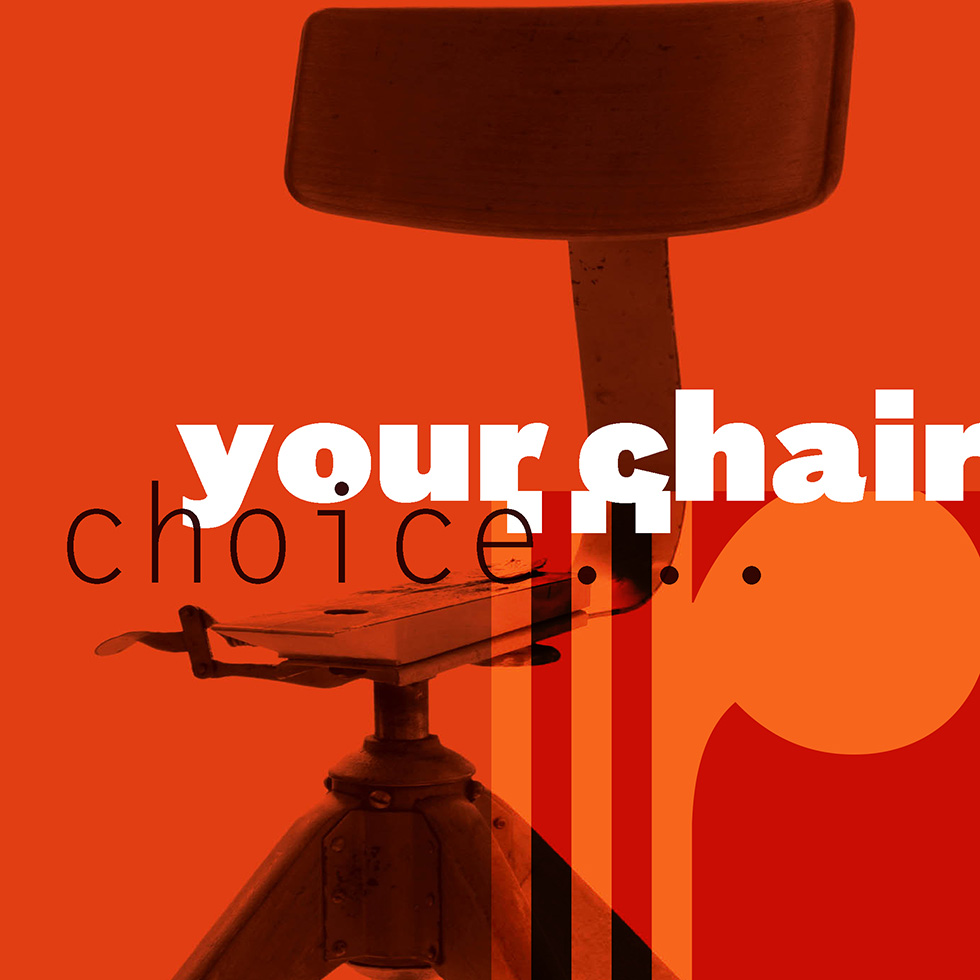
the tenth episode of your chair, your choice… is presented by writer & curator alexia timmermans. she recommends the book notes brèves sur l’art et la manière de ranger ses livres by the french writer & film maker georges perec, for aeroplanes achieve existence only when they are hijacked – or – you keep books so you won’t forget them, but you forget them anyway, even if you keep them...

© alexia timmermans

© penguin books
to ensure that the corresponding entrance door can later be found again, the prudent architect creates it first and then designs the associated house around it. order and the system underlying it are gladly drawn upon for character analyses, but from which point of view, actually? at the end of the sixteenth century, michel de montaigne reflects in his standard work essais on critical self-examination through the analysis of his study, including his library and the arrangement of the books within it. in 1931, walter benjamin takes up again, in his essay unpacking my library, the reflection on the special relationship between collector and object, and pop culture, too, thanks to nick hornby’s 1995 cult novel high fidelity, now proudly points to the meaning and purpose of conceptual procedural strategies in dealing with record collections. according to one of its heavily philosophical protagonists, rob, sorting is pure self-knowledge, and even the truly meaning-bestowing question of whether one arranges by alphabet, genre, or date of acquisition is thoroughly run through as a matter that grounds existence. george perec’s article notes brèves sur l’art…, originally published in 1978 in the journal l’humidité, is included in the posthumous publication penser/classer and does not formulate itself in the introspective navel-gazing of vinyl junkies who see the world as a disc, but rather analyzes the way books are staged from an external perspective.
as a decades-long and willing victim of smirking first-time viewers of one’s own collections, the raised eyebrow accompanied by the appended question about the color-based order of books, comics, records, cds, or dvds is merely the deceptively innocent beginning of a painfully verbal farce. whoever manages to extract something of deep psychological value from the juxtaposition of objects represented by multiple copies gladly proclaims it through elegant facial play and fluid expressions, spiced with gleefully excited mental botox injections. if the battered collector then reports a hybrid of various ordering strategies, the haunting quickly comes to an end, yet the question once again hangs in the anxiety-sweated room: who or what is interested in that? perec’s essay and classic of an “everyday philosophy” demonstrates, with obsessive systematicity, dry humor, and a deeply resonant understanding of human psychology, the attempt to explore and clarify the impossibility of perfect order. the helpless urge to want to organize a library is, according to the author, a battle against chaos, and the applied criteria intended to gain control over this disorder easily exceed the intellectual capacity of the author hornby, who wishes to follow along this path. perec surveys the limits of what is feasible, and above all the unassignable items, as non-participating residual quantities of an imperfect arrangement, are his greatest heartbreak.
if one views georges perec through the stern lens of two gentlemen of decidedly elevated philosophical pretensions, one can readily wave him through as the literary embodiment of roland barthes’ theoretical world. the author busily disappears behind rules, form, and structure, the text refuses intentional unambiguity, and the reader himself is declared the central site of meaning production. perec therefore writes not in spite of the death of the author, but out of it, and even michel foucault’s laser eyes remain gracious toward his literary stance. author perec does not function as an origin, but as an operator; his name stands for procedures rather than for meaning. the texts are ambiguous, refuse to take a stance, and meaning itself likewise lies in the reader’s contemplation—perec here too receives full marks as a practical executor of foucault’s theory of authorship. order as a cosmologically existential problem is the highly individual triangular story between the hands and the eyes of the owner and the respective collected object of passionate desire. sorting is a pleasurable form of self-conversation; one does not sort for others, one does so in order to tell oneself who one is. preserving certain things and arranging them in a particular way therefore does not fall under tediously expansive modes of explanation, no matter how invited guests may intend to judge it.
iir, february 2026
Um sicherzustellen, dass die entsprechende Eingangstür später auch wieder aufgefunden wird, erstellt der umsichtige Architekt diese zuerst und gestaltet das zugehörige Haus sodann darum herum. Ordnung und das ihr zugrunde liegende System werden gerne zu charakterlichen Analysen herangezogen, nur unter welchem Gesichtspunkt eigentlich? Michel de Montaigne spiegelt Ende des 16. Jahrhunderts in seinem Standardwerk Essais kritische Selbstbetrachtung auf die Analyse seines Arbeitszimmers samt Bibliothek und die Anordnung der Bücher darin. Walter Benjamin nimmt 1931 in seinem Essay Ich packe meine Bibliothek aus die Reflexion über das besondere Verhältnis zwischen Sammler und Objekt erneut auf, und auch die Popkultur kann dank Nick Hornbys 1995 erschienenem Kultbuch High Fidelity nun stolz auf Sinn und Zweck konzeptioneller Verfahrensstrategien im Umgang mit Schallplattensammlungen verweisen. Entsprechend eines der darin schwerst philosophisch hin und wieder zurück pendelnden Protagonisten Rob ist Sortieren pure Selbsterkenntnis, und auch die wahrlich sinnspendende Frage, ob nun nach Alphabet, Genre oder Erwerbsdatum arrangiert wird, wird existenzbegründend durchgehechelt. George Perecs ursprünglich 1978 in der Zeitschrift L’Humidité erschienener Artikel Notes brèves sur l’art… wird in die posthume Veröffentlichung Penser/Classer aufgenommen und formuliert sich nicht in der introspektiven Nabelschau, die die Welt als Scheibe betrachtender Vinyljunkies, sondern analysiert die Art, Bücher zu inszenieren, aus einer Außenperspektive.
Als jahrzehntelanges und willfähriges Opfer schmunzelnder Erstbetrachter der eigenen Sammlungen ist die hochgezogene Augenbraue samt beigelegter Frage nach farblicher Ordnung der Bücher, Comics, Schallplatten, CDs oder DVDs erst der trügerisch unschuldige Anfang eines leidvoll verbalen Klamauks. Wer auch immer was auch immer in der Aneinanderreihung von durch mehrere Exemplare vertretenen Gegenständen tiefenpsychologisch Wertvolles zu schöpfen vermag, verkündet dies gern im eleganten Mienenspiel fazialer Fluidität unter freudig erregter Beigabe mentaler Botoxspritzer. Vermeldet der leidgeprügelte Sammler dann eine Mischform verschiedener Ordnungsstrategien, finder der Spuk ein rasches Ende, aber die Frage steht erneut im angstverschweißten Raum: Wen oder was interessiert das? Perecs Essay und Klassiker einer „Alltagsphilosophie“ führt mit obsessiver Systematik, trockenem Humor und einem tief resonierenden Verständnis für menschliche Psychologie den Versuch vor, die Unmöglichkeit perfekter Ordnung klärend zu erkunden. Der hilflose Drang, eine Bibliothek ordnen zu wollen, sei, so der Autor, ein Kampf gegen das Chaos, und die angewandten Kriterien, dieser Unordnung habhaft werden zu wollen, überschreiten die geistige Kapazität des auf diesem Pfad nachfolgen wollenden Autots Hornby um ein Leichtes. Perec schreitet die Grenzen der Machbarkeit ab, und vor allem nicht zuordenbare Exemplare sind als nicht teilhabende Restmengen eines imperfekten Arrangements sein größtes Herzeleid.
Betrachtet man Georges Perec durch die gestrenge Brille zweier Herren durchaus gehobenerer philosophischer Ansprüchlichkeiten, kann man diesen sehr wohl als literarische Verkörperung Roland Barthes’ Theoriewelt durchwinken. Der Autor verschwindet hier geschäftig hinter Regelwerk, Form und Struktur, der Text verweigert sich intentionaler Eindeutigkeit, und der Leser selbst wird zum zentralen Ort von Sinnproduktion erklärt. Perec schreibt also nicht trotz des Todes des Autors, sondern aus ihm heraus, und auch Michel Foucaults Laseraugen verbleiben bei dessen literarischer Haltung gnädig. Autor Perec funktioniert nicht als Ursprung, sondern als Operator; sein Name steht für Verfahrensweisen, weniger für Sinn. Die Texte sind mehrdeutig, verweigern Haltung, und die Bedeutung selbst liegt ebenfalls in der Betrachtung des Lesers – Perec erhält auch hier als praktischer Vollzieher Foucault’scher Autorentheorie die volle Punktzahl. Ordnung als kosmologisch existenzielles Problem ist die höchst individuelle Dreiecksgeschichte zwischen den Händen und den Augen des Besitzers sowie dem jeweiligen sammlerischen Objekt leidenschaftlicher Begierde. Sortieren ist eine genüssliche Form des Selbstgesprächs, man sortiert nicht für andere, man tut dies, um sich selbst zu erzählen, wer man ist. Bestimmte Dinge aufzubewahren und diese auf bestimmte Weise zu ordnen, fällt somit nicht unter leidig ausufernde Erklärungsmodalitäten, wie auch immer geladene Gäste darüber zu urteilen gedenken.
iir, february 2026