

bob dylan
blonde on blonde, 1966
album
#11
the eleventh episode of your chair, your choice… is presented by music producer & vinyl dealer martin väterlein. he recommends the album blonde on blonde by the american musician bob dylan, for he finds it incredible that dylan released subterranean homesick blues, highway 61 and, at the end of this incredible trilogy, a double album within a matter of months, almost bursting with creativity – all that only to virtually disappear shortly afterwards...

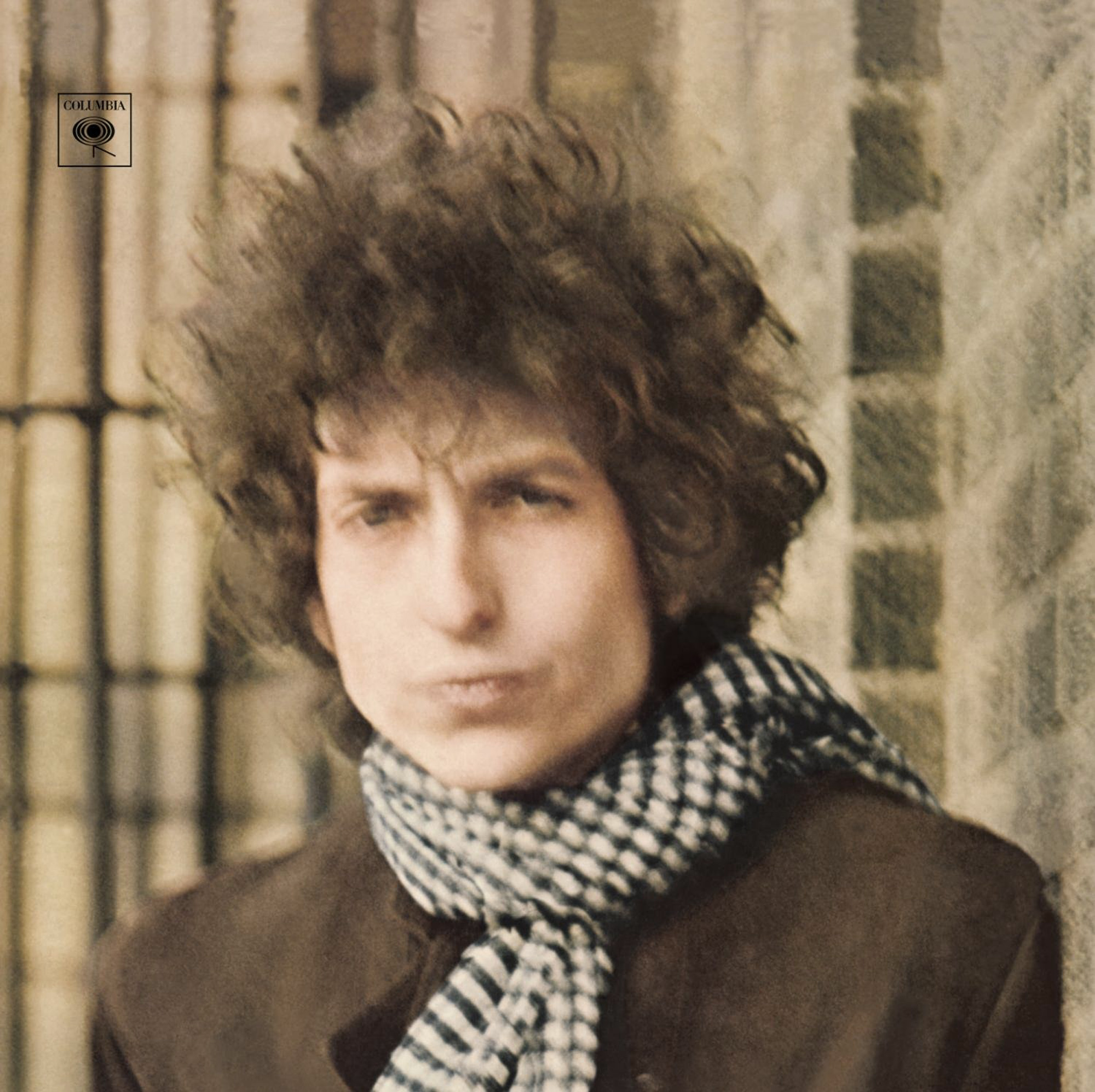
© columbia
chelsea is still new york’s butcher and meatpacking district, long before the chic galleries settle in and make themselves comfortable. jerry schatzberg wants to photograph dylan there, but it is bitterly cold and the musician, dressed only in a suede jacket and a black-and-white checkered scarf, is freezing. the fact that he then chooses a blurred photo from the session for the cover of blonde on blonde says a great deal about the man. clever people claim to know better and insist the photo is shot in greenwich village; others in turn claim dylan is on lsd during the shoot. everyone knows better, and one thing becomes abundantly clear – absolutely everyone concerns themselves with dylan, and half a century later the nobel prize in literature follows. dylan is said to have created new poetic expressions within the great american song tradition – well now, thin little rascal, really. thank goodness the justifications for such prizes do not themselves have to be of literary quality. the planet dylan is still in its growth phase in 1966, reaches its final size in the seventies and then begins to shrink again, but one thing seems certain: everyone rubs up against dylan for very different reasons. supreme almighty god here, crumpled grumbling goat-with-a-guitar there – there is simply no way around it, bob demands attitude and position.
about the master of the gloriously resonant harmonica one can scatter little bagfuls of cheerful confetti made of wild thought experiments, and thus blonde on blonde can be reflected upon fictionally through two remarkable personalities – imagine simone de beauvoir writes dylan a letter on the occasion of his seventh studio album. beauvoir and dylan live in very different worlds in 1966, and yet she recognizes quite a few things. on the one hand she admires the freedom, the absolute refusal to be pinned down, language as an act of liberation, and the courage of incompleteness. as an existentialist this is familiar to her, as someone who does not accept the world as given but continually renegotiates it. dylan’s image of women, however, occupies – no, annoys – her: sad eyed lady…, johanna – the nameless woman in nearly every song. it may all be precisely observed, but it remains a mere projection surface of the male gaze, of his pain. these women are not subjects, they are mirrors, albeit beautiful ones. she senses that dylan himself is trapped – in his role, his mythology, in expectation. this feels familiar to her, and she wants to tell him: you see others very clearly, but not yourself. and that is strength and weakness at once.
christopher nolan is immediately fascinated by the album’s temporal structuring. blonde on blonde’s narration does not proceed linearly – it jumps, breaks off, and returns. johanna begins in the middle of a scene; the camera has long been rolling. one enters half-faded memories and experiences time as a subjective event, not as an objective sequence. dylan’s masterful handling of simultaneity in this song plays across several levels within a single verse – the now of the sleepless night, the absent johanna, the intrusive past. dylan resolves this purely through language, without cuts or structure – only through the density of images. the epic length of sad eyed lady… with its circling refusal to end, returning again and again to the same question … that is classic nolan treatment of time, stretching because emotion demands it. but: dylan lets go where nolan controls; he trusts the chaos of the scenario with a freedom that nolan’s instinct can only resist… bob dylan’s open field of interpretation can be viewed through an endlessly expandable number of differently polished lenses, but here too the rule applies as everywhere else – listen, experience it yourself, create your own image.
iir, february 2026
Chelsea ist noch das Metzger- und Fleischereiviertel New Yorks, lange bevor die schicken Galerien es sich dort gemütlich machen. Jerry Schatzberg will Dylan dort fotografieren, aber es ist lausig kalt, und der Musiker, nur mit Wildlederjacke und schwarz-weiß kariertem Schal bekleidet, friert. Dass dieser dann auch noch ein unscharfes Foto der Session für das Cover von Blonde on Blonde wählt, sagt viel über den Mann aus. Kluge Menschen wissen es besser und skandieren, das Foto sei im Greenwich Village geschossen, andere wiederum behaupten, Dylan sei bei der Aufnahme auf LSD. Jeder weiß es besser, und eines wird dadurch überdeutlich – wirklich jeder beschäftigt sich mit Dylan, und ein halbes Jahrhundert später folgt der Literaturnobelpreis. Dylan habe neue poetische Ausdrucksformen innerhalb der großen amerikanischen Songtradition geschaffen – na, Dünnerlütchen, jetzt aber. Gott sei Dank müssen Begründungen für solche Preise selbst nicht literarisch hochwertig sein. Der Planet Dylan ist 1966 noch in der Wachstumsphase, erreicht in den Siebzigern seine finale Größe und beginnt sodann wieder zu schrumpfen, aber eines scheint gewiss: Jeder reibt sich an Dylan aus sehr unterschiedlichen Gründen. Höchst allmächtiger Gott hier, verknitterter Meckerziegen-Klampfer dort – man kommt einfach nicht drum herum, der Bob verlangt Haltung und Position.
Über den Meister der herrlich erklingenden Mundharmonika kann man tütenweise munteres Konfetti wilder Gedankenspiele verteilen, und so lässt sich Blonde on Blonde fiktiv anhand zweier bemerkenswerter Persönlichkeiten durchspielen – man stelle sich vor, Simone de Beauvoir schreibe Dylan einen Brief anlässlich dessen siebten Studioalbums. Beauvoir und Dylan leben 1966 in sehr unterschiedlichen Welten, und dennoch erkennt sie so manches. Einerseits bewundert sie die Freiheit, die absolute Weigerung, sich festlegen zu lassen, die Sprache als Befreiungsakt und den Mut zur Unvollständigkeit. Als Existenzialistin ist ihr dies vertraut, als jemand, der die Welt nicht als gegeben hinnimmt, sondern sie permanent neu verhandelt. Dylans Frauenbild allerdings beschäftigt, nein, ärgert sie: Sad Eyed Lady …, Johanna – die namenlose Frau in annähernd jedem Song. Das mag zwar alles präzise beobachtet sein, verbleibt aber als reine Projektionsfläche des männlichen Blicks, seines Schmerzes. Diese Frauen sind keine Subjekte, sie sind Spiegel, wenn auch wunderschöne. Sie spürt, dass Dylan selbst gefangen ist – in seiner Rolle, seiner Mythologie, in der Erwartung. Das kommt ihr bekannt vor, und sie will ihm sagen: Du siehst zwar andere sehr genau, aber nicht dich selbst. Und das ist Stärke und Schwäche in einem.
Christopher Nolan ist umgehend von der zeitlichen Strukturierung des Albums fasziniert. Blonde on Blondes Narration verläuft nicht linear – sie springt, bricht ab und kehrt wieder. Johanna setzt mitten in der Szene ein, die Kamera läuft schon längst mit, man betritt zur Hälfte verblasste Erinnerungen und erfährt Zeit als subjektives Erlebnis, nicht als objektive Abfolge. Dylans meisterlicher Umgang mit Gleichzeitigkeit in diesem Song bespielt mehrere Ebenen in ein und demselben Vers – das Jetzt der schlaflosen Nacht, die abwesende Johanna, die sich aufdrängende Vergangenheit. Dylan löst dies rein sprachlich, ohne Schnitt oder Struktur, nur durch die Dichte der Bilder. Die epische Länge von Sad Eyed Lady…, mit der in Kreisen wiederkehrenden Weigerung zu enden, um wieder und wieder zur selben Frage zurückzukehren … das ist klassischer Nolan-Umgang mit Zeit, die sich dehnt, weil Emotion dies fordert. Aber: Dylan lässt los, wo Nolan kontrolliert; er vertraut dem Chaos des Szenarios mit einer Freiheit, der Nolans Instinkt nur widersprechen kann … Bob Dylans interpretationsoffene Basis lässt sich durch eine unendlich erweiterbare Anzahl verschieden geschliffener Linsen betrachten, aber auch hier gilt wie überall sonst auch: anhören, selbst erleben, selbst ein Bild erstellen.
iir, february 2026