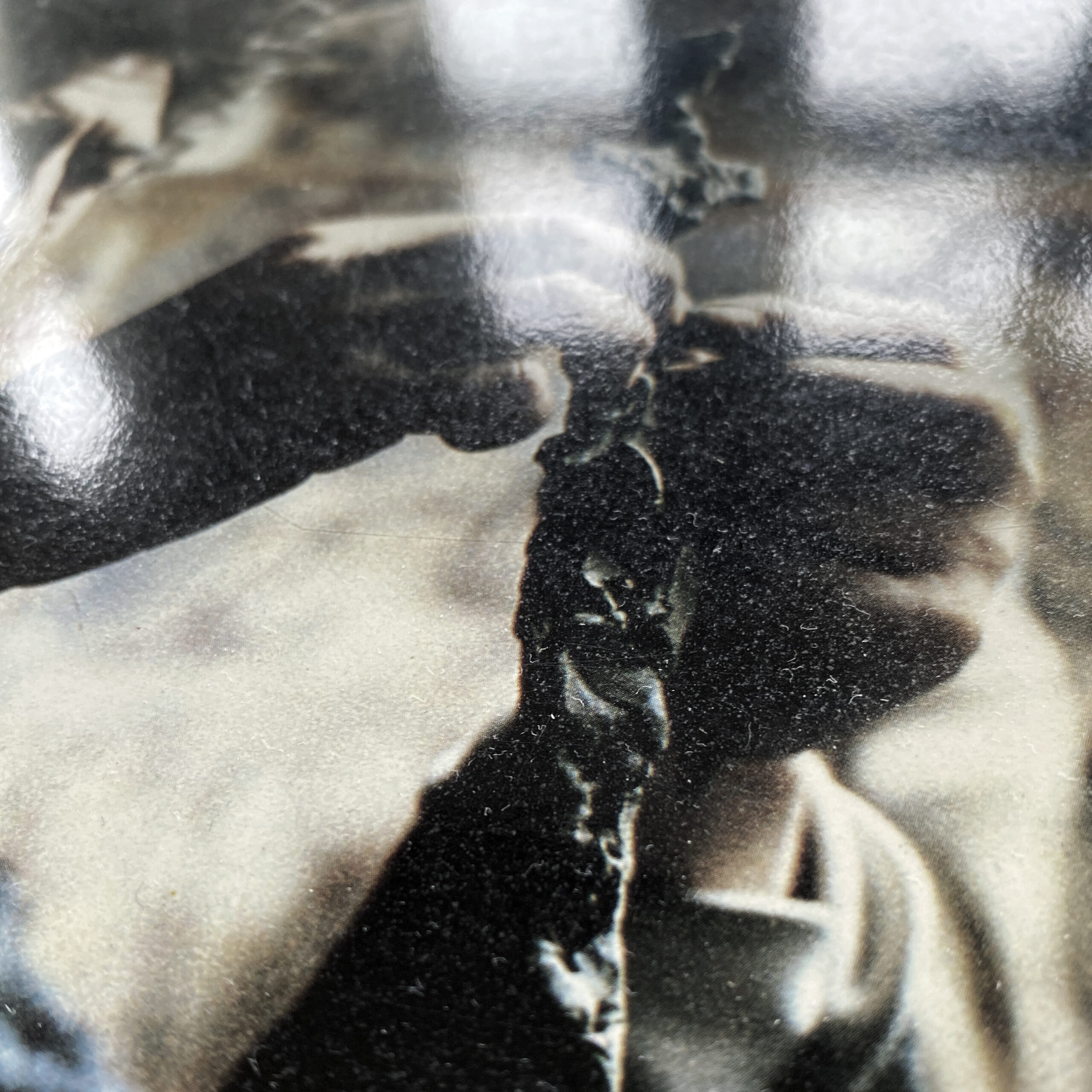

alberto giacometti
le nez, 1947
bronze, steel, wire & hemp, 82 x 73 x 39 cm
while the others are dancing,
martin eugen raabenstein’s
sensor spotlight focuses on:
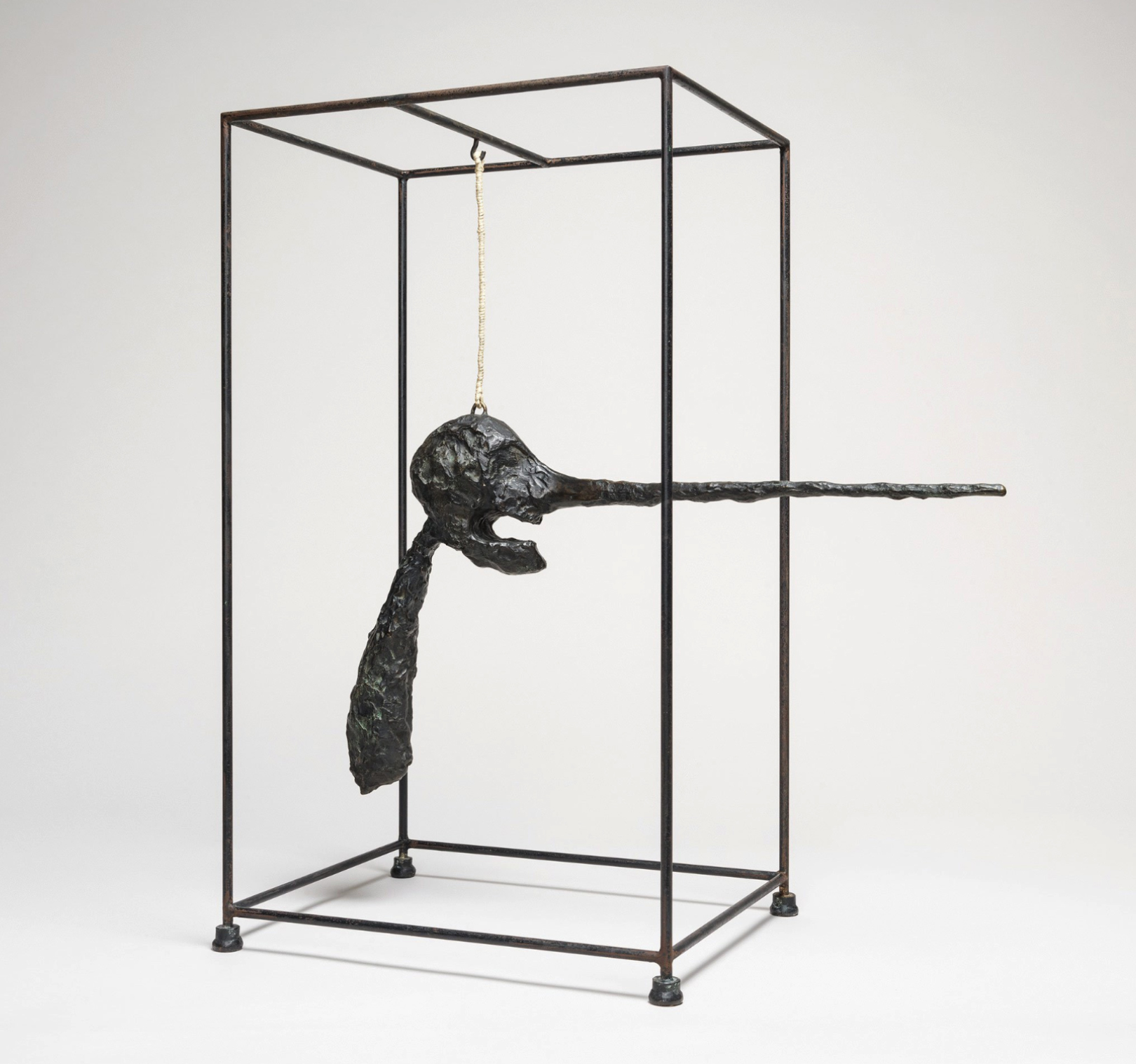
© fondation giacometti
carlo collodi’s unruly wooden rascal can walk and seems to fulfill all the necessary conditions of neural existence, yet he simply lacks reason and the conscience that arises from it. this good-for-nothing in mechanical form possesses at least enough emotion to wish to become a real human boy, and the author—whose civil name is lorenzini and who works as both journalist and prefectural employee—adds precisely this missing surplus of deficient reasoning to the coming-of-age story in the form of a cricket tasked with advising the energetic wooden construction through word and deed. like an external hard drive equipped with knowledge and the necessary combinatory capacity, collodi, writing at the end of the nineteenth century, sketches a sociological vision that culminates in the astonishing realization that he sharply anticipates today’s smartphone-bound youth. during his lifetime, the man campaigns for italy’s independence, and although his adventures of the impudent tree-formed brat are already popular, their true value is only recognized after his death, when they come to be regarded as formative for the italian language. the wooden puppet contains a natural lie detector, a cleverly staged educational device by collodi that punishes lies so obvious they are immediately noticed with a rapidly growing nose—the proverbial metaphor is literally written across the youngster’s face and is meant to prevent him from becoming entangled in falsehoods. honesty, courage, and selflessness must be learned in order finally to become a real human boy.
alberto giacometti’s sculpture not only adopts this detail as its title; the oversized nose, suspended from a head that is presented separately from the rest of the body, hangs within a metallic cubic frame—one could scarcely make a factual indication more manifest. the head itself, with its open-mouthed formulation, resembles another work from the same year, except that “head on a rod” has evidently not lied and can therefore rely on a stable point of departure. giacometti is no stoic reproducer of supposed realities. endowed with a strongly individualistic authorship, the painter and sculptor feels his way through his emotional world rather than trusting his eyesight and its deceptive chiaroscuro. it is therefore unquestionably remarkable how the artist, emerging from a surrealism closely associated with andré breton, draws his distinctive formal language into a shape resembling an elongated android and thus carves out a worthy place for himself in the pantheon of art history.
from the hand-shaped puppet to giacometti’s working methods there is only a small step, and it is also not surprising that the boy’s constantly advancing and retreating organ of smell might seem thematically relevant to the sculptor. yet the exact opposite is true. the background of the sculptural idea is thoroughly documented: “le nez” is an image of death, and in it giacometti processes the shock of the death of his temporary travelling companion pieter van meurs, a dutch state archivist. giacometti meets him on a train, and in september 1921 they decide to travel together to the mountain village of madonna di campiglio. one night van meurs suffers severe pain caused by a heart attack and dies the following morning. in this sense, the nose becomes a metaphor for death and secures a place in giacometti’s memory as a precise detail of the dying process. what fascinates him above all is van meurs’s nose, which seems to stretch endlessly as life leaves the man—the face collapses inward in death while the nose remains unchanged in its form.
collodi allows the nose to grow as a sign of vitality and disobedience, whereas giacometti perceives it as a sign of annihilation. in his 1946 essay “le rêve, le sphinx et la mort de t.”, the artist refers to another death he witnessed and writes: “the nose became more and more prominent, the cheeks hollow, the scarcely moving mouth barely breathed anymore,” and between 1947 and 1964 he would repeatedly return to this traumatic motif as a sculptural reconstruction of a specific visual impression. pinocchio is a projection of the viewer rather than an intention of the artist; the work corresponds to a sign of death, not an educational instrument. the two interpretive fields could hardly be more different, yet where could an intelligently placed artistic barb take hold more effectively than in an obvious misunderstanding …
iir, june 2026
Carlo Collodis aufmüpfiger Holzlümmel kann zwar laufen und scheint auch sonst alle notwendigen Bedingungen neuraler Existenz zu erfüllen, aber es fehlt ihm schlichtweg an Verstand und dem daraus resultierenden Gewissen. Der Tunichtgut in Apparatform hat immerhin so viel Emotion, dass er ein echter, menschlicher Junge sein möchte, und der Journalist und Präfekturangestellte, mit bürgerlichem Namen Lorenzini heissende Autor gibt der Coming-of-Age-Geschichte eben jenes fehlende Mehr an mangelnder Denkfähigkeit in Form einer Grille bei, die die umtriebige Holzkonstruktion mit Rat und Tat zu beraten hat. Mit einer mit Wissen und notwendiger Kombinatorik ausgestatteten, externen Festplatte gleich zeichnet der Ende des 19. Jahrhunderts wirkende Collodi eine soziologische Vision vor, die in der baffen Erkenntnis endet, heutige von Smartphones untrennbare Jungmenschen gestochen scharf vorzuzeichnen. Zu Lebzeiten engagiert sich der Mann für Italiens Unabhängigkeit, und seine Abenteuer des aus einem Baum geformten Frechdachses sind zwar zuvor schon populär, werden aber erst nach seinem Tod in ihrem wahren Wert erkannt und als stilprägend für die italienische Sprache eingestuft. Der Holzpuppe ist ein natürlicher Lügendetektor eingebaut, eine raffiniert inszenierte Erziehungsmaßnahme Collodis, die Lügen, die so offensichtlich sind, dass sie sofort bemerkt werden, mit einer rasch anwachsenden Nase bestraft – die sprichwörtliche Metapher steht dem Knirps förmlich ins Gesicht geschrieben und soll ihn daran hindern, sich in Unwahrheiten zu verstricken. Ehrlichkeit, Mut und Selbstlosigkeit sind zu erlernen, um so endlich ein echter Menschenjunge zu werden.
Alberto Giacomettis Skulptur trägt nicht nur dieses Detail als Titel, die übergroße Nase, am Kopfe hängend, den man allerdings vom körperlichen Rest getrennt präsentiert, baumelt inmitten eines metallenen, kubischen Rahmens – stärker kann man einen faktischen Fingerzeig nicht manifestieren. Der Kopf selbst ähnelt in seiner mit offenem Mund gestalteten Ausformulierung einer anderen Arbeit desselben Jahres, nur dass „Kopf auf einem Stab“ offensichtlich nicht gelogen hat und sich so einer stabilen Ausgangslage versichert sein kann. Giacometti ist kein stoischer Nachbildner vermeintlicher Realismen, der mit einer stark individualistisch ausgeprägten Autorschaft ausgestattete Maler und Bildhauer ertastet seine Gefühlswelt eher, als dass er sich auf sein Augenlicht und dessen trügerisches Helldunkel verlässt. So ist es unzweifelhaft bemerkenswert, wie der sich aus einem André Breton nahen Surrealismus herauswindende Künstler seine ureigenste Gestaltung in eine eher länglichen Androiden entsprechende Form zieht und sich so einen würdigen Platz im Pantheon der Kunstgeschichte erknetet.
Von der händisch geformten Puppe zu Giacomettis Arbeitsmethodik ist es wohl nur ein kleiner Schritt, und so ist es ebenfalls nicht weiter verwunderlich, dass des Bengels unentwegt vor- und zurückweichendes Riechorgan den Bildhauer thematisch interessieren könnte, aber das genaue Gegenteil ist der Fall. Der Entstehungshintergrund der skulpturalen Idee ist exakt dokumentiert: „Le Nez“ ist ein Bild des Todes, und Giacometti verarbeitet darin den Schock über den Tod seines zeitweiligen Reisegefährten Pieter van Meurs, eines niederländischen Staatsarchivars. Giacometti lernt diesen im Zug kennen, und sie beschließen im September 1921, gemeinsam in das Bergdorf Madonna di Campiglio zu reisen. In einer Nacht bekommt van Meurs bedingt durch einen Herzinfarkt starke Schmerzen und verstirbt am kommenden Morgen. Die Nase ist in diesem Sinne Metapher für den Tod und formt sich als präzises Detail des Sterbevorgangs einen Platz in Giacomettis Erinnerung. Diesen fesselt vor allem van Meurs’ Nase, die sich scheinbar endlos zu dehnen beginnt, während das Leben aus dem Manne schwindet – das Gesicht fällt sterbend in sich zusammen, während die Nase in ihrer Form verbleibt.
Collodi lässt die Nase als Zeichen von Lebendigkeit und Ungehorsam anwachsen, aber Giacometti nimmt diese als Zeichen der Auslöschung wahr. In seinem 1946 publizierten Essay „Le rêve, le sphinx et la mort de T.“ bezieht sich der Künstler auf einen weiteren beigewohnten Tod und schreibt: „Die Nase trat immer stärker hervor, die Wangen wurden hohl, der kaum bewegliche Mund atmete kaum noch“ – und wird zwischen 1947 und 1964 mehrfach zu diesem traumatischen Motiv zurückkehren, als die bildhauerische Rekonstruktion eines spezifisch visuellen Eindrucks. Pinocchio ist eine Betrachterprojektion und keine Intention des Künstlers, die einem Zeichen des Todes entspricht und kein Erziehungsinstrument darstellt. Beide Interpretationsfelder können nicht unterschiedlicher sein, aber wo setzt ein künstlerisch klug gesetzter Stachel besser an als in einem offensichtlichen Missverständnis …
iir, june 2026