

édouard manet
olympia, 1863
oil on canvas, 130,5 x 190 cm
while the others are dancing,
martin eugen raabenstein’s
sensor spotlight focuses on:
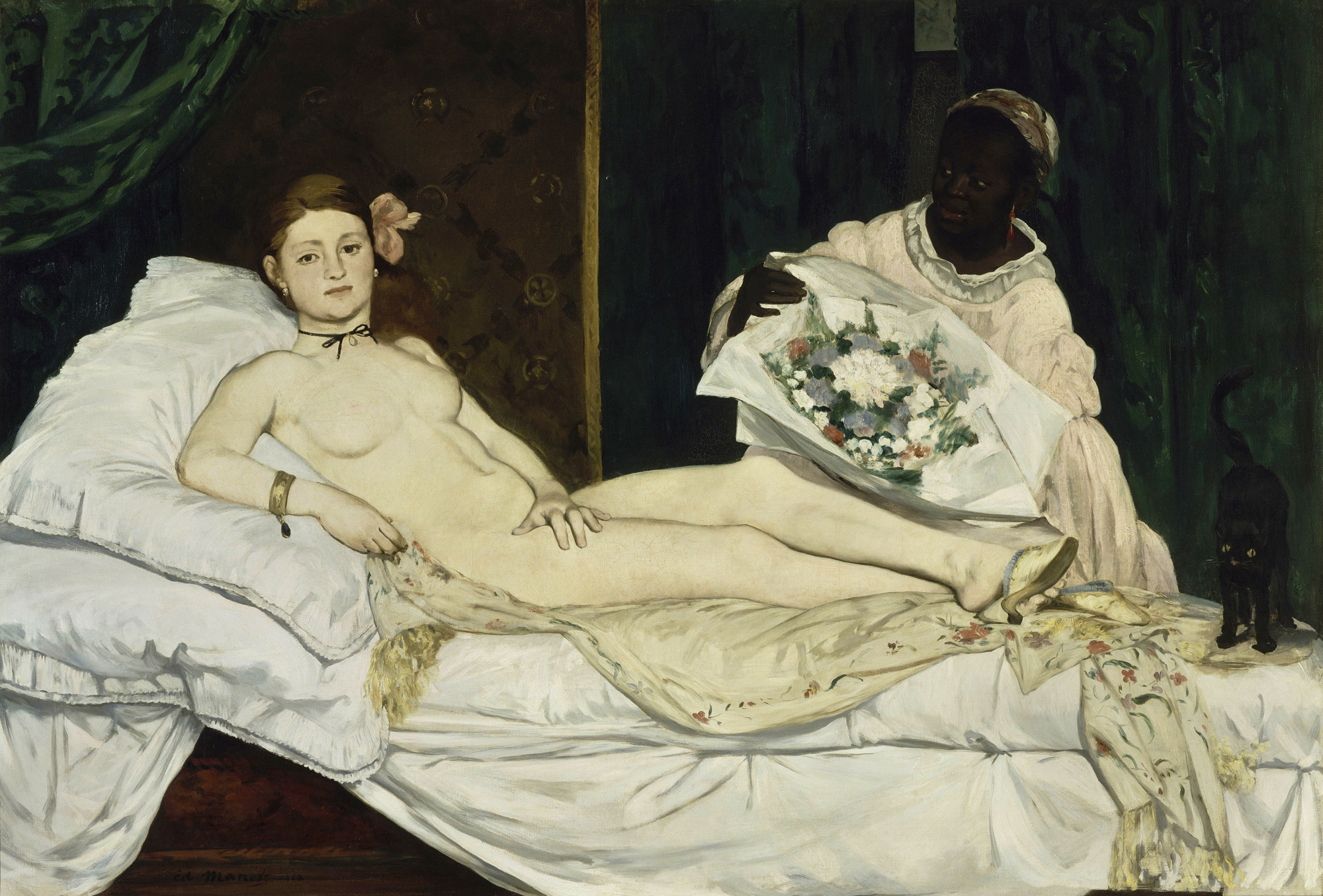
© musée d’orsay
since 1859 édouard manet keeps trying to show paintings at the most important annual exhibition, the paris salon, sometimes his works are received with favorable criticism, but nevertheless his art rejected there ends up at the salon des refusés, where his work the luncheon on the grass causes a violent scandal in 1863. art historians see the establishment of this parallel exhibition to the great salon as a birth hour of modernism, but that is after all just the second choice, so he keeps trying again and again. after pietro aretino tizian already conceals anything too naked with humble piety and presents next to his venus also a version of the mocking of christ, whether he succeeds however with this trick to outsmart his patron charles v the corresponding wikipedia entry unfortunately does not mention. in 1865 finally manet masters the very same camouflage and papers over sensuality with christian standards – the salon committee admits olympia together with his mocking of christ to the exhibition. the artist’s caution is probably warranted, victorine meurent, the scandalously naked model in the spectacularly sensational luncheon picture is identical to the olympia performer. manet’s patience to wait two years with the presentation of this work seems to pay off, what however now crashes down upon him these lofty halls of art have not experienced like this before.
unclothed female form seems in principle not to bother the art connoisseur at the time of napoleon lll in the least, but manet is a japonist and strongly influenced by the isometric ukiyo-e regularly crowding into the country as packaging material. this extremely flatly and contrastlessly designed innovation of french painting now excites tout paris, plus the meurent is supposed to obviously represent a prostitute, quel scandal, in truth she is however an esteemed painter colleague of manet. violently threatened with walking sticks and umbrellas, olympia has to be hung a row further up for security, and the queue of those who intend to insult this piece of trash under drooling howls of rage simply does not want to end. the press may be no less malicious, there is talk of a yellow-bellied odalisque, morgue, infantile ignorance, incredible meanness and cynicism, and a hack writer even sees a kind of female gorilla made of rubber splitternaked on a bed, aping tizian’s venus. the accordingly amused caricatures representing not only monkeys in all relevant sheets do the bitter rest – so much poured out mockery, such an atmosphere of immeasurably slipped anger and hatred one first has to be able to meet with a calm head.
manet finds very little favorable encouragement and émile zola writes at least only two years later: ‚… i know that you succeed in an admirable way to create the work of a painter, of a great painter …‘. further years pass, the turmoil around the picture calms down and through the resumption of the olympia theme by paul cézanne, paul gauguin and edgar degas his reputation also stabilizes. pablo picasso then finally in 1901 cannot help but make a parody, but that is just how he is, the small cheeky spanier. manet is one of the founders of modern painting, his version of olympia is still shown here and there but the painter keeps the picture for his lifetime. the 20th century is flooded by its re-interpretations, from jean dubuffet to gerhard richter to larry rivers countless artists simply do not get tired of the theme. rivers finally declares a dark-skinned woman to be olympia almost one hundred years after creation of the original and names his 1970 work i like olympia in black face. manet’s place is the louvre zola demands already in 1866, there the picture is stored then also from 1907 until it transfers over into the musée d’orsay in 1986.
iir, july 2026
Seit dem Jahr 1859 versucht Édouard Manet immer wieder, Gemälde auf der wichtigsten Jahresschau, dem Pariser Salon, zu zeigen. Teilweise werden seine Werke mit wohlwollender Kritik bedacht, aber dennoch landet seine dort abgelehnte Kunst dann doch beim Salon des Refusés, bei dem seine Arbeit Das Frühstück im Grünen 1863 einen heftigen Skandal auslöst. Kunsthistoriker sehen in der Errichtung dieser Parallelausstellung zum großen Salon zwar eine Geburtsstunde der Moderne, aber das ist nun mal doch nur die zweite Wahl, also versucht er es immer wieder. Nach Pietro Aretino kaschiert schon Tizian allzu Nacktes mit demütiger Frömmigkeit und präsentiert neben seiner Venus auch eine Fassung der Verspottung Christi; ob es ihm allerdings gelingt, mit diesem Trick seinen Gönner Karl V. zu übertölpeln, erwähnt der entsprechende Wikipedia-Eintrag leider nicht. 1865 schließlich meistert Manet dieselbige Camouflage und übertüncht Sinnlichkeit mit christlichen Standards – das Salon-Gremium lässt die Olympia zusammen mit dessen Verspottung Christi zur Ausstellung zu. Des Künstlers Vorsicht ist wohl geboten: Victorine Meurent, das skandalös nackte Modell auf dem spektakulär aufsehenerregenden Frühstücksbild, ist identisch mit der Olympia-Darstellerin. Manets Geduld, zwei Jahre mit der Präsentation dieses Werkes zu warten, scheint aufzugehen; was allerdings nun über ihm zusammenbricht, erleben diese hehren Hallen der Kunst so noch nicht.
Unbekleidet Weibliches scheint den Kunstkenner zur Zeit Napoleons III. prinzipiell nicht im Mindesten zu stören, aber Manet ist Japonist und stark von den regelmäßig als Verpackungsmaterial ins Land drängenden, isometrisch angelegten Ukiyo-e beeinflusst. Diese äußerst flach und kontrastlos angelegte Neuerung französischer Malerei erregt nun tout Paris. Zudem soll die Meurent offensichtlich eine Prostituierte darstellen, quel scandale, in Wahrheit ist sie allerdings eine geschätzte Malerkollegin Manets. Mit Spazierstöcken und Regenschirmen heftigst bedroht, muss die Olympia zur Sicherung eine Reihe weiter höher gehängt werden, und die Schlange derer, die dieses Machwerk unter geiferndem Wutgeheul zu beschimpfen gedenken, will einfach nicht abreißen. Die Presse mag nicht minder gehässig sein: Von gelbbäuchiger Odaliske, Leichenschauhaus, infantiler Unkenntnis, unglaublicher Gemeinheit und Zynismus ist die Rede, und ein Schreiberling sieht gar eine Art weiblichen Gorilla aus Gummi splitternackt auf einem Bett, Tizians Venus nachäffend. Die entsprechend amüsiert nicht nur Affen darstellenden Karikaturen in allen einschlägigen Blättchen erledigen den bitteren Rest – soviel ausgeschüttetem Spott, solch einer Atmosphäre maßlos entglittener Wut und Hass muss man erst mal gelassenen Hauptes begegnen können.
Manet findet sehr wenig wohlwollenden Zuspruch und Émile Zola schreibt immerhin erst zwei Jahre später: „… ich weiß, dass es Ihnen auf bewundernswerte Weise glückt, das Werk eines Malers, eines großen Malers zu schaffen …“. Weitere Jahre vergehen, der Aufruhr um das Bild beruhigt sich und durch die Wiederaufnahme des Olympia-Themas durch Paul Cézanne, Paul Gauguin und Edgar Degas stabilisiert sich auch sein Ruf. Pablo Picasso kann es dann 1901 schließlich doch nicht lassen, eine Parodie anzufertigen, aber so ist er nun mal, der kleine, freche Spanier. Manet ist einer der Begründer moderner Malerei, seine Version der Olympia wird noch hier und da gezeigt, aber der maler behält das Bild zeit seines Lebens. Das 20. Jahrhundert ist überflutet von dessen Neuinterpretationen, von Jean Dubuffet über Gerhard Richter bis hin zu Larry Rivers werden unzählige Künstler des Themas einfach nicht müde. Rivers schließlich erklärt knapp einhundert Jahre nach Erstellung des Originals eine dunkelhäutige Frau zur Olympia und nennt sein 1970er Werk I like Olympia in Black Face. Manets Platz ist der Louvre, fordert Zola schon 1866, dort lagert das Bild dann auch ab 1907, bis es 1986 ins Musée d’Orsay überwechselt.
iir, july 2026
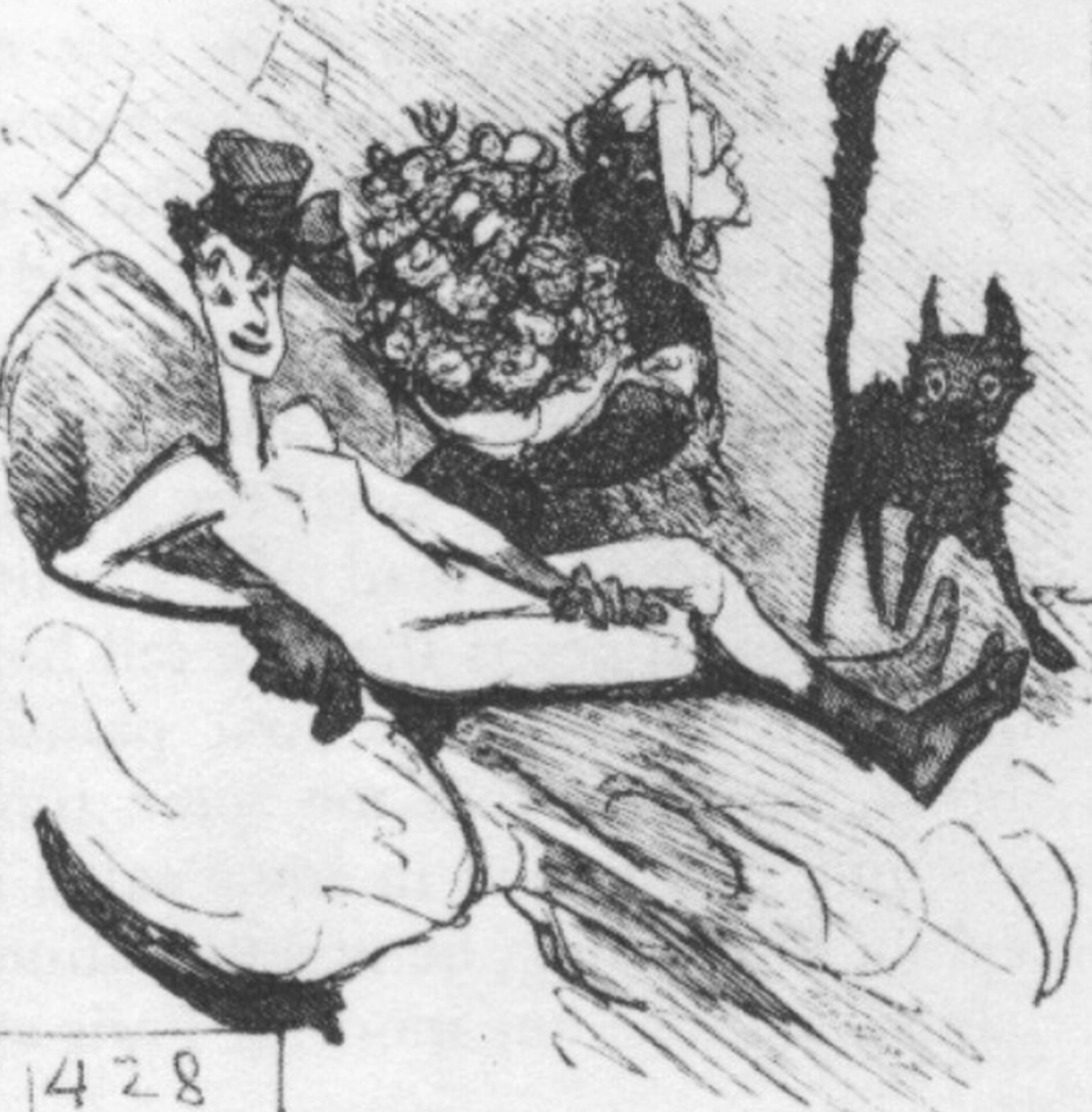
© cham (amédée de noé), drawing, 1865