
laurie anderson
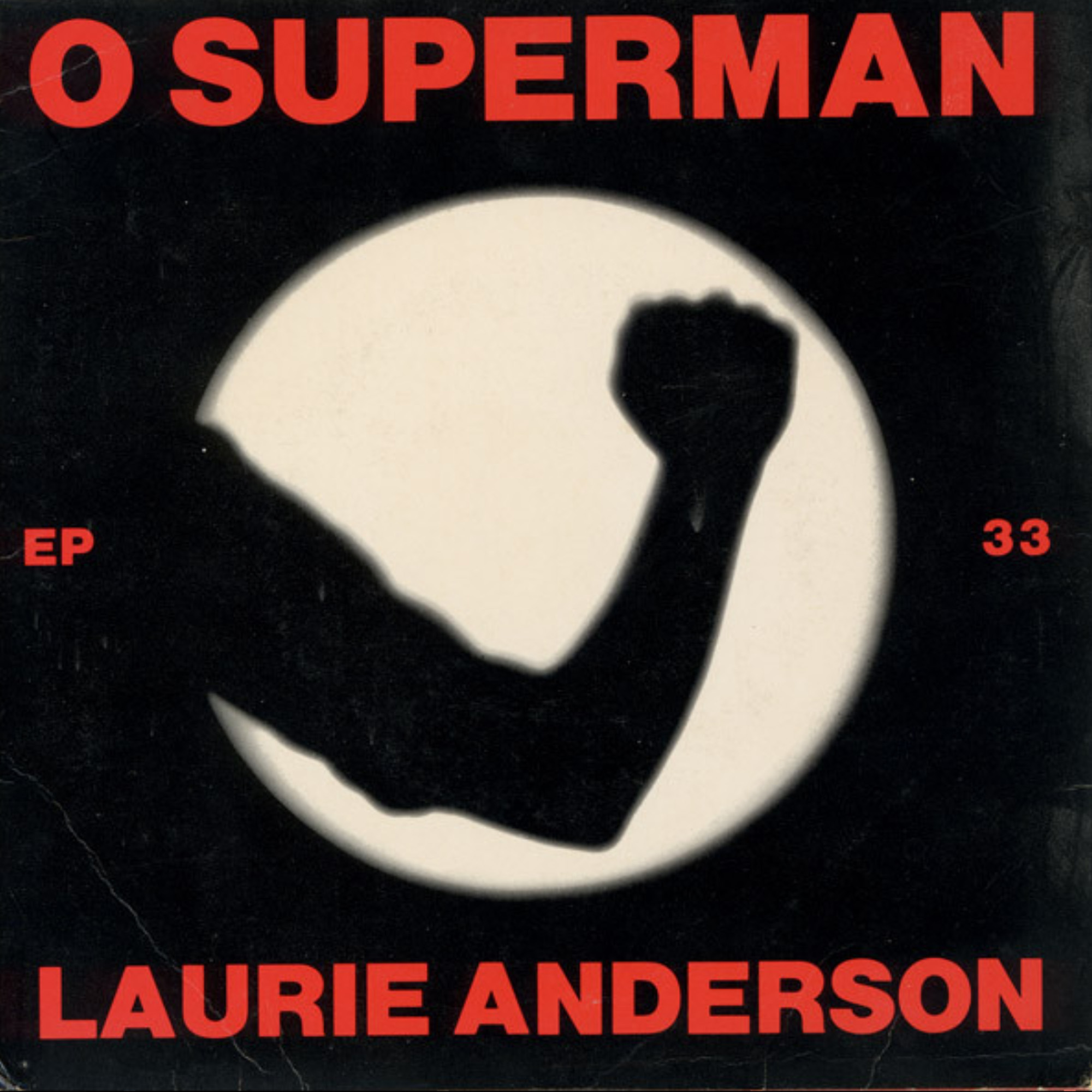
o superman, 1981
experimental music chart hit
while the others are dancing,
martin eugen raabenstein’s
sensor spotlight focuses on:

© laurie anderson, taken form the o superman video clip, 1981
history repeats itself in such a miserable way that you can never eat enough to match how much you would need to vomit, but clever sayings alone have never helped. with operation eagle claw, the us military attempts in april 1980 to free 52 american hostages from the us embassy in tehran. the mission ends as a strategic catastrophe: helicopters crash in a sandstorm, collide with each other, eight us soldiers die, and the mission has to be aborted with a burning red face and tail tucked between the legs. the traumatic disaster presents the supposedly technologically and militarily superior superpower as completely incapable, vulnerable, and clueless, and this is exactly where laurie anderson’s concept begins: to pinch the so-called superman, the symbol of an america considered invincible, right in the ass. o superman goes on to write both pop and radio history in 1981 – and does so as an absolutely classic example of an avant-garde art project. the track is completely unfit for the charts and is not meant for them at all. laurie anderson is a performance artist from the new york avant-garde scene and releases it on the small independent label one ten records, run by visual artist and archivist bob george, in an edition of 1,000 copies.
one copy interestingly ends up in the hands of the bbc radio 1 dj god john peel, whose insatiable hunger for new and alternative music gains legendary status. the more than eight-minute-long piece, mainly consisting of a “ha ha ha” loop combined with anderson’s vocoder-distorted text, makes the bbc phones run hot – listeners are fascinated, confused, and absolutely want their own copy of the track, and this is exactly what makes the talent scouts at warner bros. records prick up their ears. the absurd but undeniably commercial potential of this non-pop song eventually convinces the major label to persuade anderson to meet the exploding uk demand with a repress and professional distribution. warner is so eager that they immediately offer a multi-album deal, which in the first place makes possible the 1982 release of her heavily celebrated debut album big science. in october 1981 god plays roulette and the unbelievable happens: a minimalist electronic piece with an explosive political background lands at number 2 on the british singles chart. john peel’s magic hand makes it possible – an incredible 8 minutes and 21 seconds are played on radio stations that normally reject any track longer than three and a half minutes. that is what you call a mega hype.
“here come the planes. they’re american planes. made in america. smoking or non-smoking?” is anderson’s clear association with the helicopters and aircraft of the clumsily failed rescue mission. she connects the threat of military violence in a macabre way with the exhausting banality of american everyday culture – “smoking or non-smoking?” is a standard question on a regular commercial flight. anderson reflects on the decay of values, the transition toward raw state power, and frames everything as a downward spiral. when love and justice fail, the state turns to violence, and if even that fails, as in tehran, people seek refuge all the more. anderson cynically personifies the state here as mother and then goes even further: “so hold me, mom, in your long arms. / in your automatic arms. your electronic arms. / in your arms. / so hold me, mom, in your petrochemical arms. your military arms.” with the mention of the american industrial-military complex, the technology that is supposed to protect americans is exposed as an indifferent, dehumanized substitute for real security – blind faith in technological superiority as a new paranoid religion can only fail. then as now, artists address this, and the story of their successful mission is sometimes quite adventurous.
iir, march 2026
Geschichte wiederholt sich auf so elende Weise, dass man gar nicht genug fressen kann, wie man kotzen müsste, aber kluge Sprüche allein haben noch nie geholfen. Mit der Operation Eagle Claw versucht das US-Militär im April 1980, 52 amerikanische Geiseln aus der US-Botschaft in Teheran zu befreien. Die Mission endet als strategische Katastrophe: Hubschrauber stürzen in einem Sandsturm ab, kollidieren miteinander, acht US-Soldaten sterben dabei, und die Mission muss mit hochrotem Kopf und eingezogenem Schwanz abgebrochen werden. Das traumatische Desaster stellt die vermeintlich technologisch und militärisch überlegene Supermacht als absolut unfähig, verletzlich und planlos dar, und genau hier setzt Laurie Andersons Konzept an, den sogenannten Superman als Symbol eines als unbesiegbar geltenden Amerikas in den Hintern zu kneifen. O Superman wird 1981 sowohl Pop- als auch Radiogeschichte schreiben – und dies als absolut klassisches Beispiel eines avantgardistischen Kunstprojektes. Der Track ist sowas von hitparadenuntauglich und auch gar nicht dafür gedacht. Laurie Anderson ist Performance-Künstlerin der New Yorker Avantgarde-Szene und releast ihn auf dem kleinen Independent-Label One Ten Records des bildenden Künstlers und Archivars Bob George in einer 1000er-Auflage.
Ein Exemplar davon landet interessanterweise in den Händen des BBC Radio 1-Radio-DJs Gottes John Peel, dessen unstillbarer Hunger für neue und alternative Musik Legendenstatus erfährt. Das über acht Minuten lange, hauptsächlich aus einem „ha ha ha“ bestehenden Loop mit Andersons vocoderverzerrtem Text kombinierte Stück lässt die BBC-Telefone heißlaufen – die Hörer sind fasziniert, verwirrt und wollen unbedingt ihre eigene Kopie des Tracks, und genau das macht die Talent-Scouts von Warner Bros. Records sehr hellhörig. Das absurde, aber durchaus kommerzielle Potenzial dieses Non-Popsongs bringt das Major-Label dazu, Anderson schließlich davon zu überzeugen, mit einer Neupressung und professionellem Vertrieb der explodierenden UK-Nachfrage nachzukommen. Die Warners sind so heiß, einen Vertrag über mehrere Alben gleich mit anzubieten, der die 1982er-Veröffentlichung ihres heftig abgefeierten Debütalbums Big Science überhaupt erst ermöglicht. Im Oktober 1981 spielt Gott Roulette, und das Unfassbare passiert: Ein minimalistisch elektronisches Stück mit explosivem politischem Hintergrund landet auf Platz 2 der britischen Single-Charts. John Peels zaubernde Hand macht’s möglich – unglaubliche 8 Minuten und 21 Sekunden werden auf allen Radiostationen gespielt, die grundsätzlich jeden Track über dreieinhalb Minuten ablehnen. Das nennt man dann einen Mega-Hype.
„Here come the planes. They’re American planes. Made in America. Smoking or non-smoking?“ ist Andersons eindeutige Assoziation auf Hubschrauber und Flugzeuge der tumb gescheiterten Rettungsmission. Sie verknüpft Bedrohung durch militärische Gewalt auf makabre Art mit der entkräftenden Banalität amerikanischer Alltagskultur – „Smoking or non-smoking?“ ist eine Standardfrage auf einem regulären Linienflug. Anderson sinniert über Wertezerfall, den Übergang zu roher Staatsmacht und verpackt alles als Abwärtsspirale. Wenn Liebe und Gerechtigkeit versagen, greife der Staat zu Gewalt, und sollte selbst diese scheitern, wie in Teheran, suchen die Menschen dort nur umso mehr Zuflucht. Anderson personifiziert den Staat hier zynisch als Mutter und geht dann noch weiter: „So hold me, Mom, in your long arms. / In your automatic arms. Your electronic arms. / In your arms. / So hold me, Mom, in your petrochemical arms. Your military arms.“ Mit der Erwähnung des amerikanisch-industriellen Militärkomplexes wird die Technologie, die Amerikaner eigentlich beschützen soll, als desinteressierter, entmenschlichter Ersatz für echte Sicherheit bloßgestellt – blinder technologischer Überlegenheitsglaube als neue paranoide Religion kann nur scheitern. Damals wie heute werden Künstler dies thematisieren, und die Geschichte ihrer erfolgreichen Mission ist mitunter abenteuerlich.
iir, march 2026