

n.n.
sculptural element from a reliquary ensemble: head (the great bieri), 19th century
wood, metal, palm oil, 46,5 x 24,8 x 16,8 cm
while the others are dancing,
today’s sensor review spotlight is on:

© the metropolitan museum of art
never listen to your friends, because pablo picasso visits the ethnographic collection of the musée d’ethnographie du trocadéro, today’s musée de l’homme in paris, in the spring of 1907 on the recommendation of andré derain. the spanish export sensation and cult-like chief of the local art scene through his blue and rose periods experiences a cultural shock of the highest order — not an aesthetic one in the classical sense — and it takes a while before the world begins to explore more closely what so violently rattles the mind of the stylistic inventor, restless throughout his lifetime. picasso later describes the place itself as a flea market, complaining about its musty smell. the african and oceanic masks in their chaotic and dusty rooms, however, he describes as artistically highly inspiring, even if they also fill him with a certain disgust. it is henri matisse, picasso’s lifelong counterpart, who already in the autumn of 1906 presents a carved vili head from the congo in the apartment of gertrude stein and thereby awakens picasso’s curiosity for african forms. the sheer scale of the trocadéro collection, however, causes more than merely the painter’s interested gaze. the japanese wave with its isometric depictions has already been washing across europe for several decades, the doctrine of central perspective has been pierced, and other longings for abstraction are advancing powerfully across every cultural level. so what exactly twists so violently at pablo’s frontal lobe?
the abstraction of katsushika hokusai and utagawa hiroshige remains within the framework of purely representational depiction — isometry and flatness are still representation, interpretation or not. mountain, wave, or body may be stylistically reduced, yet the reference to the visible world remains intact. the japanese ukiyo-e masters use a different grammar, but they still speak the same language within classical representation. the african mask, by contrast, does not represent an image of something, is neither portrait nor stylization of a face, but an object materializing another force entirely. living and dead, visible and invisible — these eyes do not see, they receive or transmit, and their proportions are not based on simplification but result from the strict hierarchy of their respective force: what is dangerous or sacred is enlarged accordingly. does pablo instinctively grasp the autonomous reality of the object? european tradition since the renaissance, even in its most modern cubist or cézannesque fracture, still refers back to its motif. one paints with nature, against nature, or through nature, but one still requires it as a point of departure. the mask is completely independent of this. it exists without depicting. picasso describes this moment of realization as an epiphany of fear — he does not admire, he is rather startled by his sudden understanding that art can actively intervene in the world, and so he reacts. he reworks the already begun painting les demoiselles d’avignon, leaving three figures within their cézannesque tradition while repainting two others in an angular, fragmenting unrest.
the procedure does not correspond to picasso’s usual casual abstraction; here effect arises from constructed form, and the artist leaves behind the simple level of female portraiture. picasso knows he can paint everything he sees, and that seems to be exactly his problem. in contemplating the mask, he understands the creative process: someone here has not processed what he sees, but what he fears, or needs, or wants to invoke. he sees not a simple stylistic device but an entirely different causality within this act of creation. picasso knows his own masterful craftsmanship, he knows the how, but here the pressing question of why emerges. although the thought is translated into action and oil paint, this conceptual void remains for a while. he shows the demoiselles only to his closest confidants — georges braque, guillaume apollinaire, or matisse — and receives utter incomprehension. braque literally says that picasso wants people to drink turpentine and swallow soap, and he realizes: the problem does not lie with the audience but within the matter itself. the painting crosses a boundary that nobody can yet name, himself included. by contrast, marcel duchamp’s art-historical maneuver is astonishingly simple. he deduces: descartes says, “i think, therefore i am.” existence follows from enactment. duchamp completes and names what art is; the category emerges through gesture. this is not provocation but an ontological claim with deep internal consequence. if art does not arise in the retina, as he explicitly states, but in judgment, then the urinal becomes the strictest possible proof, scholastic in its precise and inescapable logic. picasso, by contrast, sees something immense outside his own systematics that he cannot immediately grasp, and for someone who believes he possesses total control over his own system, that is more than a shock.
in 1935 walker evans photographs african masks for the museum of modern art, and now things become interesting once again. cubism in all its forms has by now become learned art history, and evans is no painter risking the collapse of a personal system as picasso is. his approach is as neutral as possible: frontal depiction, without intervention or artistic attitude. but what happens when this documentary-style classic attempts to depict soberly and plainly an object whose true spiritual functionality and power can only barely be imagined? what evans photographs, one can safely assume, is preserved within a far better conservational and museological context than the miserable accumulation of masks picasso encounters in the trocadéro in 1907. these objects from west africa, from the congo basin and the coastal regions — fang, kongo, and bamana — are also regarded there as art, but above all they are spoils, colonial commodities. they are torn from their ceremonial framework, from their initiation spaces and from the context of use, community, and belief. some still carry traces of their function: sacrificial substances, certain pigments, even organic remains. this forms their olfactory presence. they smell. the entire room stinks, as picasso says. these objects are not dead; they are living things uprooted, without names, without function or context. paradoxically, picasso recognizes this, sees the pure structure, the intention, the operative force, freed from everything that as a european would normally block his access, and he draws essential benefit from this act of plunder — that is the dark side of this story.
iir, may 2026
Höre nie auf deine Freunde, denn Pablo Picasso besucht auf Anraten André Derain im Frühjahr 1907 die ethnografische Sammlung des Musée d’Ethnographie du Trocadéro, das heutige Musée de l’Homme in Paris. Der spanische Exportschlager, mit seiner Blauen und Rosa Periode kultiger Chef der dortigen Kunstszene erlebt einen Kulturschock der Sonderklasse – keinen ästhetischen im klassischen Sinne, und es wird eine Weile dauern, bis die Welt näher erkunden darf, was dem zu Lebzeiten umtriebigen Stilerfinder so unsäglich am Hirn zaust. Picasso wird den Ort selbst später als Flohmarkt bezeichnen, den muffigen Eigengeruch dort bemängeln. Die afrikanischen und ozeanischen Masken in ihren unübersichtlichen und staubigen Räumen allerdings stellt er als künstlerisch sehr inspirierend dar, auch wenn ihn ein gewisser Ekel an der reinen Freude hindert. Es ist Henri Matisse, Picassos lebenslanger Counterpart, der bereits im Herbst 1906 einen geschnitzten kongolesischen Vili-Kopf in Gertrude Steins Wohnung präsentiert und damit Picassos Neugier an afrikanischen Formen anreisst. Die schiere Masse der Trocadéro-Sammlung hingegen bewirkt mehr als des Malers interessierten Blick. Die japanische Welle mit ihren isometrischen Darstellungen schwappt nun schon seit mehreren Jahrzehnten über die europäischen Lande, die zentralperspektivische Doktrin ist durchstoßen, und auch andere Abstraktionsgelüste sind auf sämtlichen kulturellen Ebenen schwer auf dem Vormarsch – Was also genau zwirbelt da so mächtig an Pablos Frontallappen?
Katsushika Hokusais und Utagawa Hiroshiges Abstraktion verbleibt im Rahmen rein repräsentativer Darstellung – Isometrie und Flächigkeit sind Abbildung, Interpretation hin oder her. Berg, Welle oder Körper werden stilisierend erfasst, die Referenz zur sichtbaren Welt allerdings bleibt bestehen. Die japanischen Ukiyo-e-Meister nutzen zwar eine andere Grammatik, sprechen aber dieselbe Sprache innerhalb klassischer Darstellung. Die afrikanische Maske hingegen stellt kein Abbild von etwas dar, ist weder Porträt noch Stilisierung eines Gesichtes, sondern ein in einer anderen Funktion materialisiertes Objekt. Lebende und Tote, Sichtbares und Unsichtbares – diese Augen sehen nicht, sie empfangen oder senden, und ihre Proportionen basieren nicht auf simpler Reduktion, sondern resultieren aus der zwingenden Hierarchie ihrer entsprechenden Wirkkraft, was gefährlich oder heilig ist, wird entsprechend vergrößert. Begreift Pablo instinktiv die autonome Realität des Objektes? Die europäische Tradition seit der Renaissance, selbst in ihrer modernsten, cézannesken Brechung, bezieht sich noch immer auf das Motiv. Man malt mit oder gegen die Natur oder durch sie hindurch, aber man bedarf ihrer als Ausgangspunkt. Die Maske ist hiervon völlig unabhängig, sie ist, ohne abzubilden. Picasso beschreibt diesen seinen erkennenden Moment als Epiphanie der Angst – er bewundert nicht, ist eher erschrocken in seinem spontanen Verständnis, dass Kunst handelnd in die Welt eingreifen kann, und so reagiert er prompt. Er überarbeitet das schon begonnene Gemälde Les Demoiselles d’Avignon, belässt drei Figurinen in ihrer Cézanne-typischen Tradition, zwei andere hingegen übermalt er nun in einer kantigen und fragmentierenden Unruhe.
Dieser Vorgang entspricht so gar nicht nicht des Spaniers gewohnt lässiger Abstraktion; hier entspringt Wirkung aus konstruierter Form, und so entwindet er sich dem Diktat eines simplen Frauenporträts. Picasso weiß, dass er alles malen kann, was er wahrnimmt, und genau das gerinnt hier zum faszinierenden Problem. In der Betrachtung der Maske begreift er deren gestalterischen Auffordeung: Hier verarbeitet jemand nicht was er sieht, sondern was er fürchtet, was er benötigt oder schlichtweg beschwören will. Picasso sieht kein simples stilistisches Mittel, sondern eine grundsätzlich anders strukturierte Kausalität, er weiß um sein Können, das Wie, aber hier stellt sich die grundsätzliche Frage nach einem anderen Warum. Obwohl er dem Gedanken promt Taten folgen lässt, verbleibt in ihm eine gedankliche Leerstelle.. Die Demoiselles zeigt er nur den engsten Vertrauten – Georges Braque, Guillaume Apollinaire oder Matisse – und erntet blankes Unverständnis dafür. Braque schimpft, Picasso wolle, dass man Terpentin trinke und Seife schlucke, und dieser erkennt, daß das Problem nicht beim Publikum liegt, sondern in der Sache selbst. Les Demoiselles überschreitet eine unklare Grenze, die noch keiner benennen kann, ihn selbst eingeschlossen. Im Gegensatz dazu ist Marcel Duchamps kunsthistorischer Kniff erstaunlich einfach. Dieser leitet von René Descartes „Ich denke, also bin ich.“ ab, Existenz folge aus dem mentalen Vollzug. Duchamp komplettiert dies nun und benennt, was zukünftig Kunst sei, die Kategorie erfolgt bei ihm aus der Gestik. Das ist keine Provokation, sondern ontologische Behauptung mit tiefer innerer Konsequenz. Wenn Kunst nicht in der Retina entsteht, wie er explizit sagt, sondern im Urteil, dann ist das Urinal in seiner präzisen und unausweichlichen Logik der eindeutige Beweis dafür. Picasso hingegen sieht etwas Großes außerhalb seiner eigenen Systematik, das er nicht sofort fassen erkann, und das ist für jemanden, der vermeint, absolute Kontrolle über sein System zu haben, mehr als nur ein Schock.
1935 fotografiert Walker Evans für das Museum of Modern Art afrikanische Masken, Kubismus in all seinen Ausformulierungen ist nun gelernte Kunstgeschichte, und Evans kein Maler, der ein System zu verlieren hat, so wie Picasso. Evans Vorgehen ist die möglichst neutrale Abbildung: frontal, ohne jedwedes Zutun oder künstlerische Haltung. Was aber passiert, wenn dieser Documentary-Style-Klassiker ein Objekt nüchtern und blank abbilden soll, von dessen wahrer spiritueller Funktionalität und Macht man nur eine Ahnung erhaschen kann? Was Evans vor die Kamera nimmt, ist mit Sicherheit in einem weitaus besseren konservatorisch-musealen Kontext aufbewahrt als die traurigen Ansammlungen der Masken, die Picasso 1907 im Trocadéro zu sehen bekommt. Diese Objekte aus Westafrika, aus dem Kongobecken und der Küstenregion – Fang, Kongo und Bamana – werden dort als primitive Kunst betrachtet, sie sind ihrem zeremoniellen Rahmen und aus dem Zusammenhang von Gebrauch, Gemeinschaft und Glaube entrissenes Beutegut und Kolonialware. Manchen haften noch die Spuren ihrer Funktion an: die Opfersubstanzen, bestimmte Pigmente oder gar organische Reste – Das bildet ihre olfaktorische Präsenz. Sie riechen. Der ganze Raum stinkt, so Picasso. Diese Objekte sind nicht tot, sie sind lebendig entwurzelt, ohne Namen, ohne Funktion oder Kontext. Paradoxerweise erkennt Picasso dies sehr genau, sieht die pure Struktur, die wahre Absicht dahinter, und erspürt was ihm als Europäer eigentlich versperrt sein müsste … Picasso und in Folge die westliche Kulturwelt zieht essentiellen Nutzen aus einem gemeinen Raub – das ist die bittere Schattenseite dieser Geschichte.
iir, may 2026
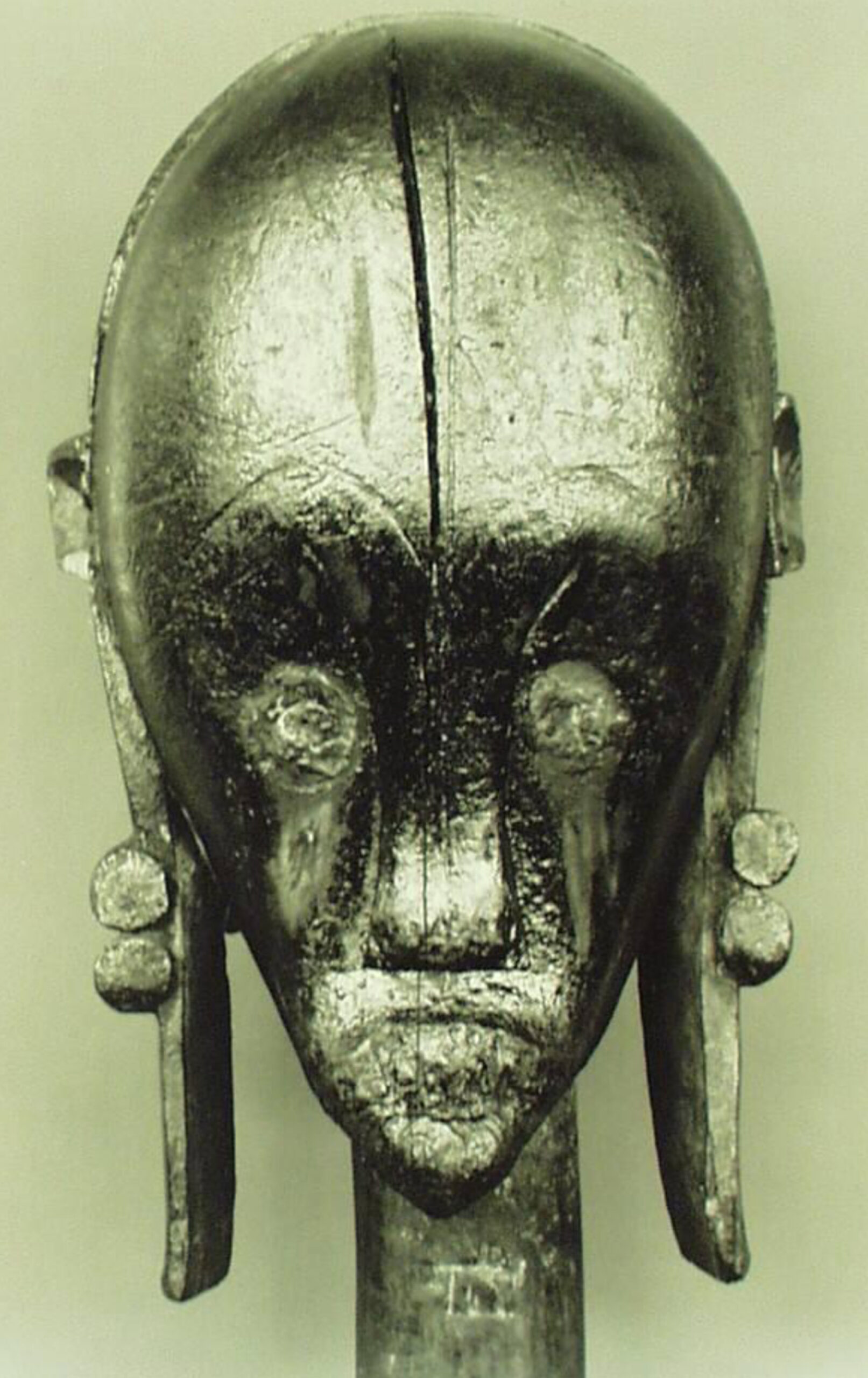
© walker evans archive, the metropolitan museum of art