
sol lewitt
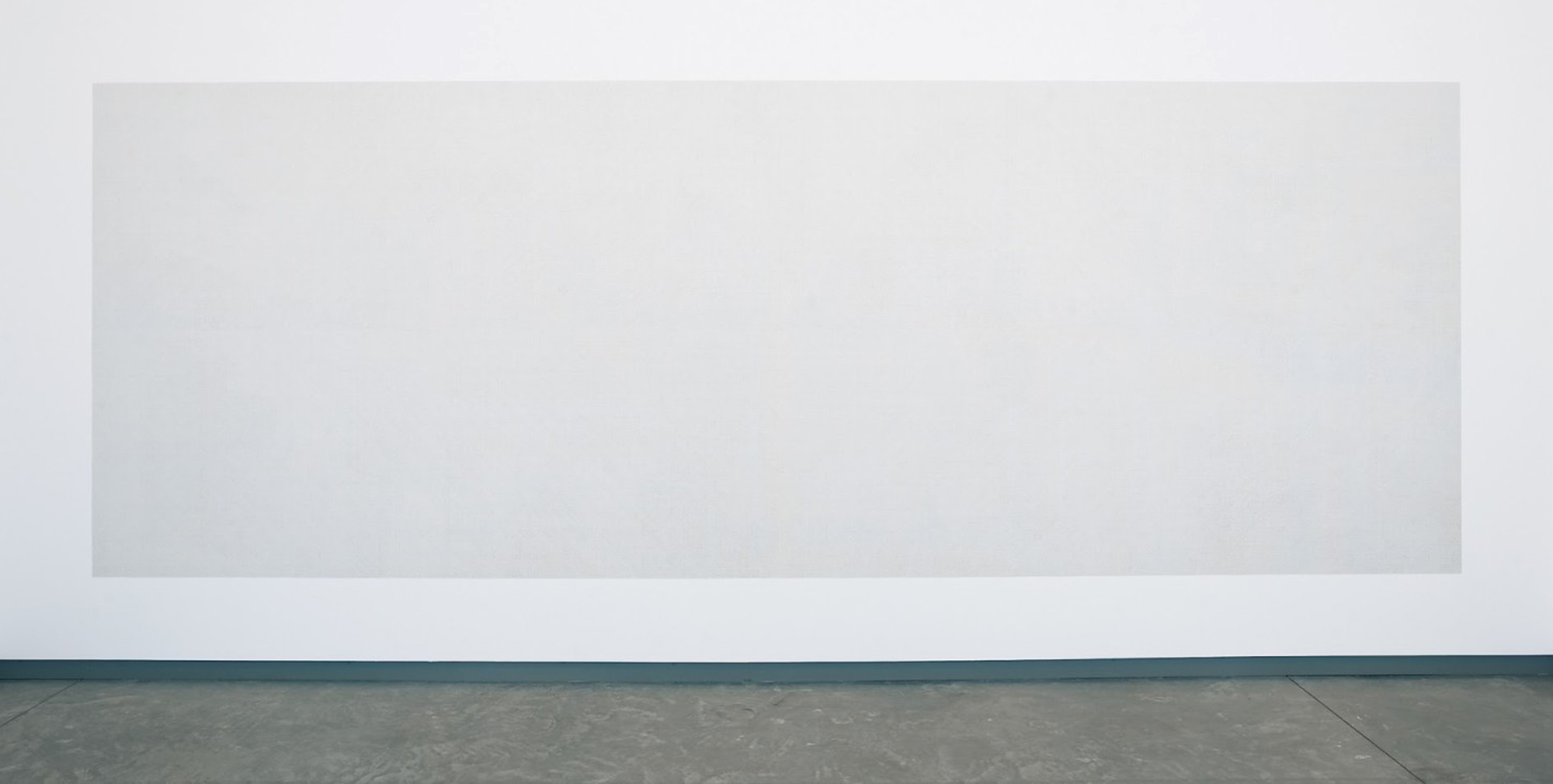
wall drawing 11 – a wall divided horizontally and vertically into four equal parts. In each part, three of the four types of line are superimposed on one another, 1969
black pencil, donated to the yale university art gallery by Anna Marie and robert f. shapiro, ba 1956, first exhibited at the paula cooper gallery, new york, first drawn by jerry orter, adrian piper, sol lewitt
while the others are dancing,
martin eugen raabenstein’s
sensor spotlight focuses on:
© sol lewitt
paragraphs on conceptual art is published in 1967 in artforum and is one of the central manifestos of conceptual art. the idea itself is declared to be the work; its elaboration is of little importance and is sometimes even unnecessary. “the idea becomes the machine that makes the art.” the conception is complete before the execution begins; what follows is a mechanical consequence. lewitt also explicitly opposes expressionist and subjective decision-making during the production process. intuition (at least in the realization), taste, and personal handwriting are to be eliminated. the artist thinks, plans, and determines. conceptual art according to sol lewitt follows logical sequences: once a premise is established, all subsequent consequences are fully carried through, without exception and in their entirety. form derives from the idea, not the other way around. the work addresses the intellect rather than visual habits or emotional states. an aesthetic reaction is acceptable, but it is neither the intention nor, above all, a criterion. complex ideas require simple forms, according to the artist. this is where the path becomes uneven, because visual complication leads to distraction from the concept, and lewitt wants to justify nothing. conceptual art, in his view, does not need to justify itself externally, neither morally nor aesthetically, and follows its own internal logic, in which the rule shapes a world and not the other way around.
lewitt’s claim that complex ideas require simple forms is an unsupported additional premise and does not follow from conceptual logic itself; rather, it is imposed upon it from the outside. it constitutes a category mistake, as he confuses clarity of rule with poverty of form. the artist’s possible proximity to the bauhaus is symptomatic here: “form follows function,” a statement by the american architect louis sullivan, is a modernist aesthetic ideology, not a logical principle. lewitt smuggles it in as a self-evident assumption, even though it contradicts his own approach. if the idea is the work, the form can be arbitrarily complex without the concept itself suffering as a result. a complex execution would then simply be a different consequence of the same premise. the strong concept—artist as legislator, execution as enforcement—is followed by a weak consequence: aesthetic reduction as dogma. mies van der rohe’s statement, “please do not confuse the simple with the simplistic,” published as a bauwelt interview on record on the occasion of his 80th birthday in 1966, offers a possible clue to the misunderstanding of the founder of conceptual art. by “simple,” mies means something structurally reduced that nevertheless contains maximum precision and tension. the neue nationalgalerie, in connection with whose construction he makes this statement in an interview, is the best example: a single steel frame, twelve columns beneath it, supporting a floating roof slab. it looks simplistic, but it is the result of extreme tectonic complexity and decades of working through a structural problem.
“almost nothing” is mies’s term for this, and by it he means not poverty but distillation. the simplistic corresponds to the exact opposite: formal reduction based on convenience or ideology. in this fictional juxtaposition, lewitt adopts the surface of this attitude—little form, clear gesture—without considering its tectonic justification. mies arrives at simplicity through a maximal problem; lewitt arrives at it through an aesthetic predecision disguised as logical necessity. he reads—purely hypothetically—mies as prescribing form rather than offering a method of thought: a misreading and a selective appropriation that misses the essential point. the spoken quotation, “please do not confuse the simple with the simplistic,” is not a theoretical distinction but a direct correction, and its tone is revealing: mies treats the confusion as an error of thought, not a matter of taste. lewitt commits exactly the error against which mies warns: he takes the simplistic for the simple—formal reduction for structural clarity. but the simple, for mies, is the result of a maximum expenditure of effort that renders itself invisible. the simplistic is reduction as a starting point, not as an endpoint. lewitt’s dogma of form is not a logical consequence of his own conceptual logic but, in this context, an unsupported aesthetic premise. mies identifies the resulting error in a recording made by the berlin broadcaster rias berlin in 1964, which is published two years later.
invoking mies van der rohe as an explanatory figure is a fictional thought experiment that is not necessary for the conceptual critique of lewitt. the weakness in lewitt’s paragraphs explains itself: if the idea is the actual work and its execution is a mechanical consequence, then the form can be arbitrarily complex as long as it follows the premise.
iir, june 2026
Paragraphs on Conceptual Art erscheint 1967 in Artforum und ist eines der zentralen Manifeste der Konzeptkunst. Die Idee selbst wird darin zum Werk erklärt; deren Ausformulierung ist von geringem Belang und beiweilen gar überflüssig. „The idea becomes the machine that makes the art.“ Die Konzeption ist abgeschlossen, bevor die Ausführung beginnt; was danach kommt, ist mechanische Konsequenz. LeWitt wendet sich zudem explizit gegen expressionistische und subjektive Entscheidungsfindung während des Produktionsprozesses. Intuition (zumindest in der Realisierung), Geschmack und Handschrift sollen eliminiert werden. Der Künstler denkt, plant und setzt fest. Konzeptuelle Kunst nach LeWitt folgt logischen Sequenzen: Ist eine Prämisse gesetzt, werden alle folgenden Konsequenzen komplett durchgespielt, und zwar ohne Ausnahme und vollständig. Die Form ergibt sich aus der Idee, nicht umgekehrt. Das Werk richtet sich an den Intellekt und nicht an Sehgewohnheiten oder emotionale Befindlichkeiten. Eine ästhetische Reaktion ist akzeptabel, aber nicht die Intention und vor allem kein Kriterium. Komplexe Ideen brauchen einfache Formen, so der Künstler. Hier wird der Weg dann holprig, denn visuelle Komplikation lässt Ablenkung vom Konzept folgen, und LeWitt will nichts rechtfertigen. Konzeptuelle Kunst muss sich nach ihm nicht nach außen begründen, weder moralisch noch ästhetisch, und folgt ihrer eigenen inneren Logik, in der die Regel eine Welt formt und nicht umgekehrt.
LeWitts Behauptung, komplexe Ideen bräuchten einfache Formen, ist eine unbegründete Zusatzprämisse und folgt nicht aus der Konzeptlogik selbst, sondern wird ihr von außen aufgesetzt. Sie entspricht einem Kategorienfehler, da er Klarheit der Regel mit Armut der Form verwechselt. Des Künstlers mögliche Nähe zum Bauhaus ist hierbei symptomatisch: „Form follows function“, ein Ausspruch des amerikanischen Architekten Louis Sullivan, ist eine modernistische Ästhetikideologie, aber kein logisches Prinzip. LeWitts schmuggelt diese als Selbstverständlichkeit mit ein, obwohl sie seinem eigenen Ansatz widerspricht. Wenn die Idee das Werk ist, kann die Form beliebig komplex sein, ohne dass das Konzept selbst darunter leidet. Komplexe Ausführung wäre dann schlicht eine andere Konsequenz derselben Prämisse. Dem starken Konzept – Künstler als Gesetzgeber, Ausführung als Vollstreckung – folgt die schwache Konsequenz: ästhetische Reduktion als Dogma. Mies van der Rohes Ausspruch „Verwechseln Sie bitte nicht das Einfache mit dem Simplen“, veröffentlicht als Bauwelt-Interview auf Schallplatte anlässlich seines 80. Geburtstages im Jahr 1966, legt eine mögliche Spur zum Missverständnis des Konzeptkunstbegründers. Mies meint mit „einfach“ das strukturell Reduzierte, das aber maximale Präzision und Spannung enthält. Die Neue Nationalgalerie, anlässlich deren Baus er diese Aussage in einem Interview macht, ist das beste Beispiel: ein einziger Stahlrahmen, zwölf Stützen darunter, mit einer schwebenden Dachplatte. Das sieht simpel aus, ist aber das Ergebnis extrem tektonischer Komplexität und jahrzehntelanger Durcharbeitung eines strukturellen Problems.
„Beinahe nichts“ – „almost nothing“ – ist Mies’ Begriff dafür, und er meint damit nicht Armut, sondern Destillation. Das Simple entspricht dem genauen Gegenteil: formale Reduktion basierend auf Bequemlichkeit oder Ideologie. In dieser fiktiven Gegenüberstellung übernimmt LeWitt die Oberfläche dieser Haltung – wenig Form, klare Geste –, ohne die tektonische Begründung mitzudenken. Mies folgt der Einfachheit aus einem Maximalproblem, LeWitt folgt ihr aufgrund einer ästhetischen Vorentscheidung, verkleidet als logische Notwendigkeit. Er liest – rein hypothetisch – Mies als Formvorschrift statt als Denkmethode: eine Fehllektüre und selektive, das Wesentliche verfehlende Aneignung. Das gesprochene Zitat „Verwechseln Sie bitte nicht das Einfache mit dem Simplen“ ist keine theoretische Distinktion, sondern direkte Zurechtweisung, und der Ton ist bezeichnend: Mies behandelt die Verwechslung als Denkfehler, nicht als Geschmacksfrage. LeWitt begeht exakt den Fehler, vor dem Mies warnt, er hält das Simple für das Einfache – formale Reduktion für strukturelle Klarheit. Aber das Einfache bei Mies ist das Ergebnis eines Maximalaufwands, der sich selbst unsichtbar macht. Das Simple ist Reduktion als Start-, nicht als Endpunkt. LeWitts Formdogma ist keine logische Konsequenz seiner eigenen Konzeptlogik, sondern in diesem Zusammenhang eine haltlose ästhetische Prämisse. Mies benennt den dabei entstehenden Fehler – anlässlich einer Tonaufnahme des Senders RIAS Berlin bereits im Jahr 1964, die zwei Jahre später veröffentlicht wird.
Mies van der Rohe erklärend heranzuziehen, ist ein fiktives, für die konzeptionelle Kritik an LeWitt allerdings nicht notwendiges Gedankenspiel. Die Schwachstelle in LeWitts „Paragraphs“ erklärt sich von selbst: Ist die Idee das eigentliche Werk und ihre Ausführung mechanische Konsequenz, kann die Form beliebig komplex sein, solange sie der Prämisse folgt.
iir, june 2026