

jacques brel
chansonnier & actor
1929 – 1978
#15
the fifteenth episode of your chair, your choice… is presented by musician, composer & sound designer frederik van der moortel. he recommends the belgian singer & actor jacques brel, for when he was young, the punky shenanigans of arno hintjes or the bold gainsbourg were more attractive to him, but after all this time, the chansonnier that excites him the most is brel now. no compromise, intense, rhythmically in front of the lush strings or other accompaniment as if being chased by them, he gave it all – a marvelous storyteller, who meant what he said with inspiring honesty …

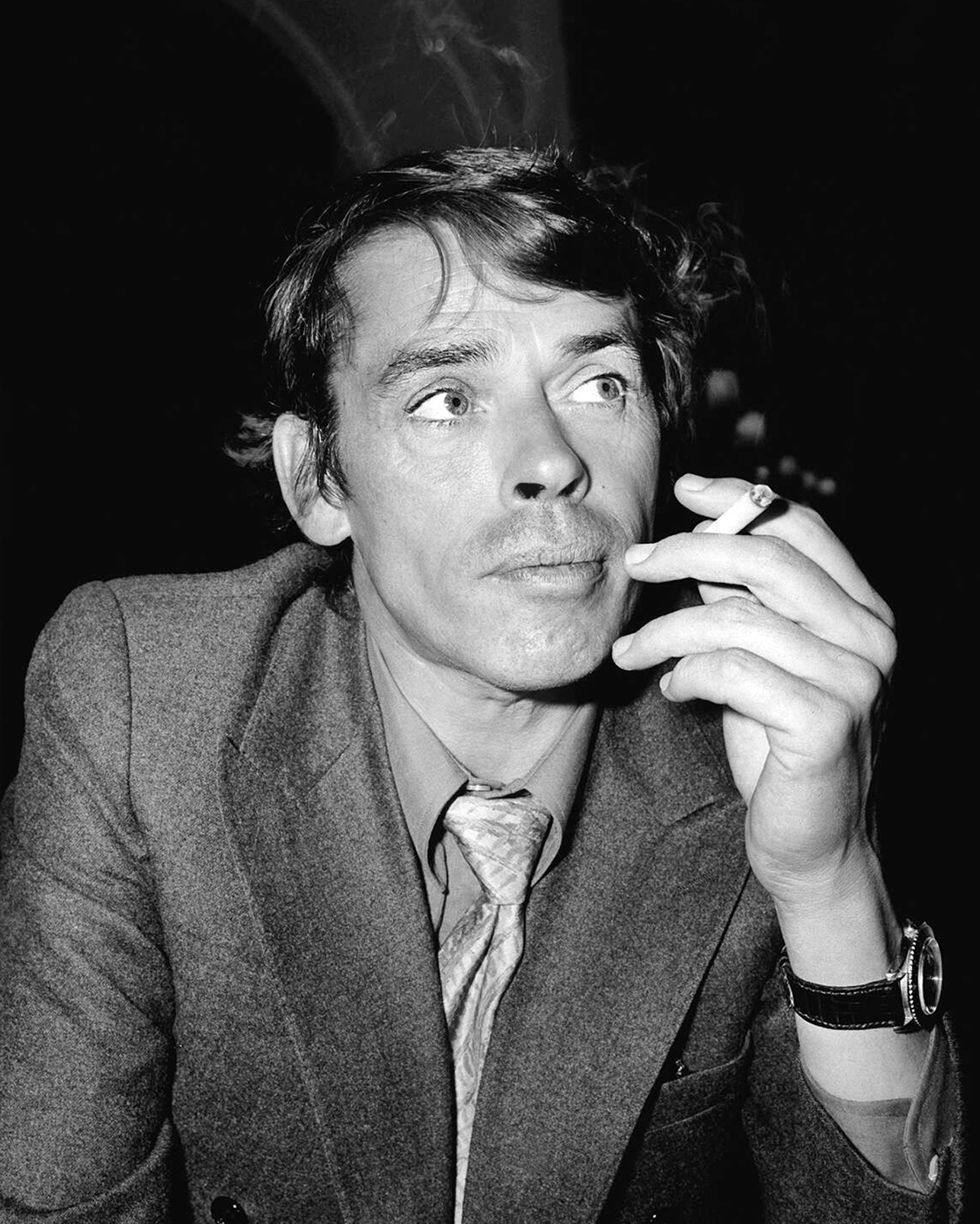
© jacques brel
in an almost stupefying moment of unbearability, jacques brel wants, in a chanson, to humble himself so far as to become the shadow of the shadow of his beloved, the shadow of her hand or even of her dog – but she must not leave him. the direct comparison of the giants of linguistic brilliance in the french chanson presents jacques brel as the passionate surgeon, léo ferré as the anarchistic high priest, and boris vian as the ingenious enfant terrible and provocateur. brel commands the architecture of emotion mercilessly; his brilliance does not lie in abstract wordplay, but very much in the force and precision he uses like a seasoned dramatist. through the skillful use of repetition, this constantly mounting pressure builds, without which this infinitely painful misery in ne me quitte pas does not function with such inevitability. extremely visual and kinetic, brel describes less feelings than bodily states: the sweating tremor, the racing heart, and also the ugliness, as in ces gens-là. to elevate the banal into the particular, even into the epic, conjures from a fleshy occasion a macabre five-course meal of spiritualized arousal. in contrast, léo ferré is the symphonic poet, the intellectual within the trio.
here the word becomes music, the music a political statement, and the gutter rises to olympus – hermetic, surreal, and darkly moving. a magician of linguistic elegance and of the sacred word beneath a snotty anarchistic attitude – one listens devoutly to monsieur william. boris vian, by contrast, with his pataphysical juggling skills, is the man of jazz, the satirist and engineer whose brilliance oscillates playfully, subversively, and technically. he is the king of wordplay and cheeky neologisms. while brel suffers and ferré declaims, vian winks at the listener, even as he speaks of death – with argot, irony, and paradox. he deconstructs language, in le déserteur it is kept simple, yet morally razor-sharp, and thus the song stands on the index for years. from the knife-grinder vian to the philosopher ferré and back to the producer of goosebumps: the era is generally highly gifted linguistically – and not only in this. brel’s rhythmic violence treats words like percussion. in amsterdam or les flamandes, syllables are first forcefully compressed, then released again into a breathlessness that no one else seeks.
the belgian’s lyricism is a precisely executed, physical assault, a method of shock. while others fade into simplicity, brel loves exuberantly baroque exaggeration. la chanson des vieux amants is an entire love life stacked with contradictions. brel unites belgian idiom, slang, and highly dramatic pathos without the cunningly protective irony of his chansonnier colleagues – and it is precisely this vulnerability of his that seeps so perfidiously under the skin. brel’s performative rhetorical genius makes him the greatest talker among his own, and the written word is not necessarily his supreme discipline. when the performance begins, however, the moment in which the word, the breath, and even the silence first become one within his body and this impulse immediately and swiftly transmits itself to the audience, it becomes unmistakably clear: this here is another category. this is no poet who merely writes, who merely describes – no, here you witness a corporeal incantation. and therefore, you poor little human being, fall silent in reverence and stillness.
“if you truly love me, keep your mouths shut. do not speak about me anymore,” are his last words.
iir, march 2026
In einem schier fassungslos machenden Moment der Unerträglichkeit will sich Jacques Brel in einem Chanson so weit erniedrigen, der Schatten des Schattens seiner Angebeteten zu werden, der Schatten ihrer Hand oder selbst der ihres Hundes – aber sie solle ihn nicht verlassen. Der direkte Vergleich der Giganten sprachlicher Brillanz im französischen Chanson zeigt Jacques Brel als den leidenschaftlichen Chirurgen, Léo Ferré ist der anarchistische Hohepriester und Boris Vian das geniale Spielkind und Provokateur. Brel beherrscht gnadenlos die Architektur der Emotion, seine Brillanz liegt nicht im abstrakten Wortspiel, aber sehr wohl in der Wucht und Präzision, die er nutzt wie ein abgebrühter Dramatiker. Durch den geschickten Einsatz von Wiederholungen baut sich dieser konstant steigernde Druck auf, ohne den dieses unendlich schmerzliche Elend in Ne me quitte pas nicht so zwingend funktioniert. Extrem visuell und kinetisch beschreibt Brel weniger Gefühle als körperliche Zustände: das schwitzende Zittern, das Herzrasen und ebenfalls das Hässliche, so in Ces gens-là. Das Banale ins Besondere, ins Epische gar zu erheben, zaubert aus fleischigem Anlass ein makabres Fünf-Gänge-Menü vergeistigter Erregung. Dagegen ist Léo Ferré der symphonische Poet, der Intellektuelle im Trio.
Hier wird das Wort zur Musik, die Musik ein politisches Statement, und die Gosse steigt auf in den Olymp – hermetisch, surreal und anrührend dunkel. Ein Magier sprachlicher Eleganz und des heiligen Wortes unter rotzig-anarchistischer Attitüde – man lausche andächtig Monsieur William. Boris Vian hingegen, mit seinen pataphysischen Jonglierkünsten, ist der Mann des Jazz, der Satiriker und Ingenieur, dessen Brillanz spielerisch, subversiv und technisch oszilliert. Er ist der König des Wortspiels und frecher Neologismen. Während Brel leidet und Ferré deklamiert, zwinkert Vian dem Hörer zu, auch wenn er gerade den Tod anspricht – mit Argot, Ironie und Paradoxien. Er dekonstruiert Sprache. In Le Déserteur ist sie schlicht gehalten, aber moralisch messerscharf, darum steht dieses Lied auch jahrelang auf dem Index. Vom Messerschleifer Vian über den Philosophen Ferré zurück zum Gänsehautproduzenten: Die Zeit ist allgemein sprachlich hochbegabt – und nicht nur dies. Brels rhythmische Gewalt behandelt Worte wie Perkussion. In Amsterdam oder Les Flamandes werden Silben erst kräftig gestaucht, dann wieder freigelassen in einer Atemlosigkeit, die sonst keiner anstrebt.
Des Belgiers Lyrik ist maßstabsgetreu durchgeführter, körperlicher Angriff, eine Schockmethode. Während andere in Schlichtheit vergehen, liebt Brel ausufernd barocke Übertreibung. La Chanson des vieux amants ist ein komplettes Liebesleben gestapelter Widersprüche. Brel verbindet belgisches Idiom, Slang und hochdramatisches Pathos ohne die raffiniert schützende Ironie seiner Chansonnier-Kollegen – und gerade diese seine Verletzlichkeit geht so perfide unter die Haut. Brels performativ-rhetorisches Genie macht ihn zum größten Parlierer unter den Seinen, und das geschriebene Wort ist nicht unbedingt seine Königsdisziplin. Wenn der Vortrag beginnt, allerdings, der Moment, in dem das Wort, der Atem und auch das Schweigen zunächst in seinem Körper eins werden und dieser Impuls sich dann umgehend und schnell auf das Publikum überträgt, wird unumwunden klar: Dies hier ist eine andere Kategorie. Dies ist kein Dichter, der nur schreibt, der nur beschreibt – nein, hier wirst du Zeuge einer leibhaftigen Beschwörung. Und drum, du armes Menschlein, schweig andächtig und stille.
„Wenn ihr mich wirklich liebt, haltet den Mund. Redet nicht mehr über mich“, sind seine letzten Worte.
iir, march 2026
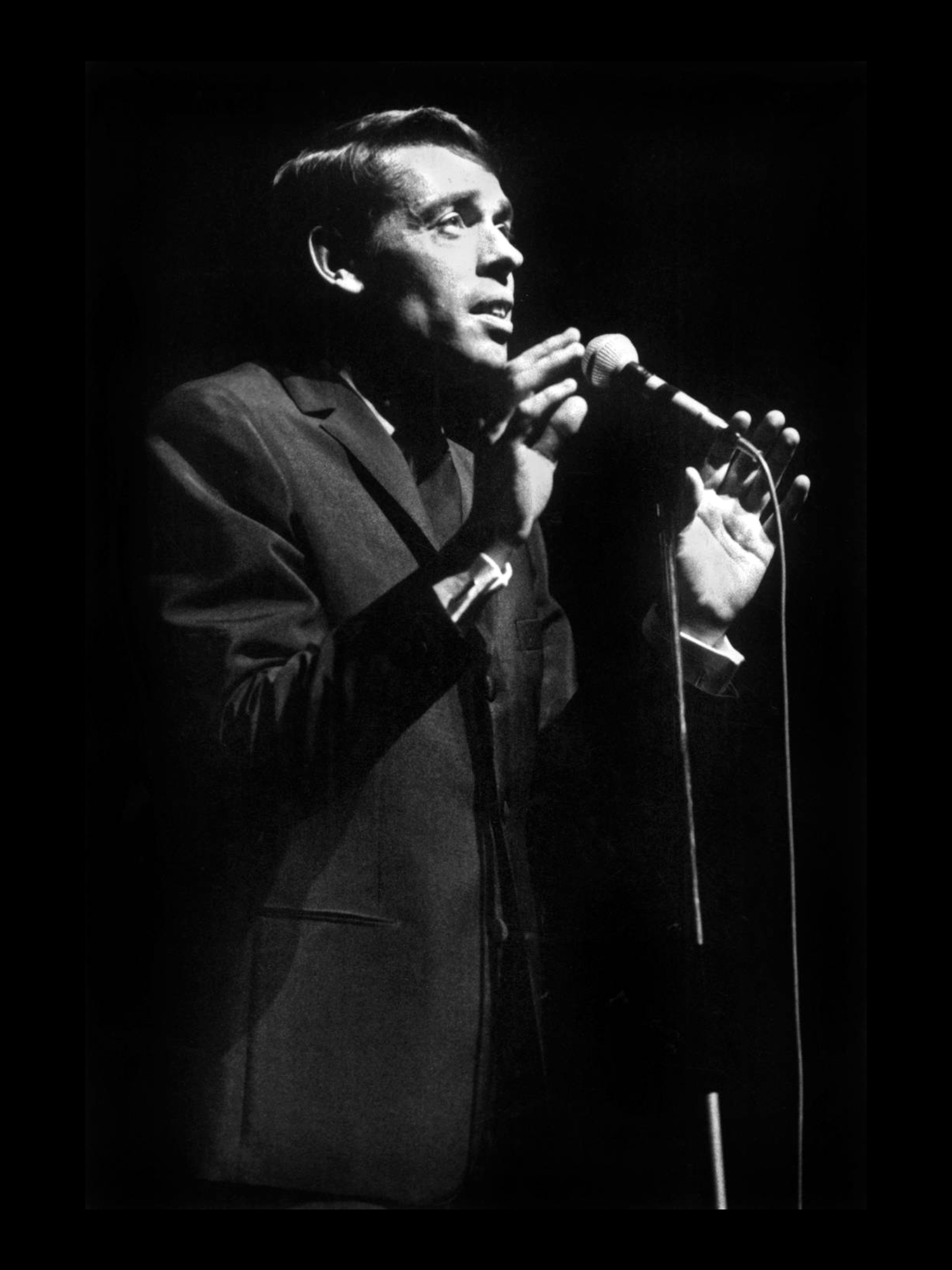
© jacques brel