
the good page
this episode:
ingolf thiel
1943 – 1985
master of staged photography
a love story
2026

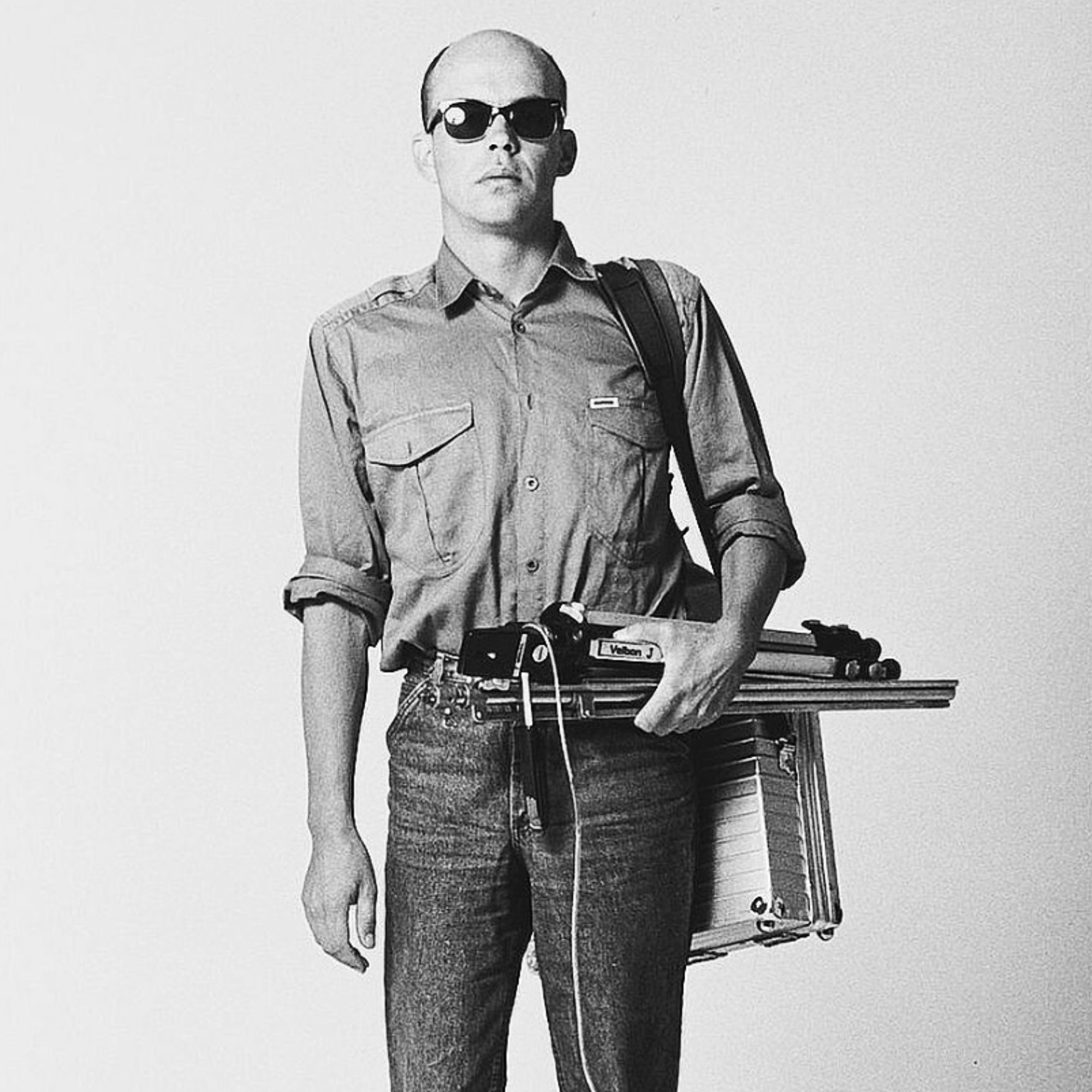
© ingolf thiel
the section of those born during the economic miracle devoted to the zeitgeist prefers to call itself the punk or new wave generation, the rather derogatory shout of boomer they will only receive much later from mockers. at the beginning of the eighties everything feels new and extraordinarily fresh, music, clothing, in short the whole scene is in a mood of departure not only in berlin, and through the multi-talent ingolf thiel the cozy feeling of not just belonging but directly taking part in a cultural revolution also grows in the conservative mercedes-benz city of stuttgart, even if in a rather provincial car-making environment – thiel, actual representative of the 68 generation, has a finely tuned sense for the sensibilities of the younger ones. the fashion designer, set designer, dancer, actor, and performer shapes the era with an intelligently constructed campaign for the jeans brand mustang. the künzelsau company achieves nationwide resonance through its people of today series, and classic american brands like wrangler or levi’s receive cleverly staged german competition in which representatives of all age groups are allowed to photograph themselves.
that very car brand with the star counts among his clients, the fashion label founded by wilhelm bleyle as well as breuninger, stuttgart’s renowned department store, which as a financial supporter of the local zoo wilhelma maintains cages with young chimpanzees on the third floor of the main building much to the delight of the public. in other respects, too, the baden-württemberg state capital is very active, the scene wanders from the multicultural pub la concha to the cult café stella and back again, only to quietly reassemble later in the discotheques oz, boa, or tangente. the mood is cheerful and mixed with hope, the filbinger successor and clever-one dubbed new minister president and modernizer lothar späth is just beginning to force his neo-conservative spirit of optimism onto state politics, and as always this entirely differently positioned youth culture also believes that its cosmopolitan-liberal wave will carry forever – but in swabia, too, the hiv virus begins to rage in the mid-eighties. but we are still right in the middle of this anything-goes feeling washing over from the usa, from which thiel also draws strong inspiration.
in ever-new variations, he stages in his photo series this cool atmosphere of an unapproachable stoicism typical of the time, under whose paper-thin ignorance the emotional alienation of the no-future generation throbs fiercely. thiel, who originally comes from photomontage, begins from 1979 to give this feeling an image, the series modern feelings and homesick for being sad contain at times timeless depictions of a driven generation, but not all of these shots age effortlessly. ever enthusiastically driven by curiosity, he now also begins to wrap models in foam, and this skillfully presented dynamics of high and low shows his special talent for creating blueprints of a timeless aesthetic. thiel flirts with a whole range of different media, one sees him as an actor, performer, and dancer, but above all ballet is his heart’s most glowing manifestation, and so he collaborates with stuttgart’s john cranko school and designs costumes for the gifted exceptional talent and in 1984 freshly appointed director of the frankfurt ballet william forsythe. all signs point steeply upward, but life has other plans – thiel’s final photo series of male nudes taken in lanzarote he has to break off prematurely and, back in his adopted home of stuttgart, succumbs officially to a second heart attack in march 1985.
iir, august 2026
Die dem Zeitgeist ergebene Sektion der zu Zeiten des Wirtschaftswunders Geborenen bezeichnet sich eher als Punk- oder New-Wave-Generation, den durchaus schmähenden Zuruf Boomer werden sie erst deutlich später von Spöttern erhalten. Zu Beginn der Achtzigerjahre fühlt sich alles neu und außerordentlich frisch an, Musik, Kleidung, kurz die ganze Szene ist nicht nur in Berlin in Aufbruchstimmung und durch das Multitalent Ingolf Thiel erwächst auch in der konservativen Mercedes-Benz-Stadt Stuttgart das wohlige Gefühl, nicht nur dazuzugehören, sondern auch direkt teilzuhaben an einer kulturellen Revolution, wenn auch in einer eher provinziellen Autobauerumgebung – Thiel, eigentlicher Vertreter der 68er-Generation, hat ein fein justiertes Gespür für die Befindlichkeiten der Jüngeren. Der Modedesigner, Bühnenbildner, Tänzer, Schauspieler und Performer prägt die Zeit mit einer intelligent aufgebauten Kampagne für die Jeansmarke Mustang. Die Künzelsauer erzielen durch ihre Leute von heute-Reihe bundesweite Resonanz und klassisch amerikanische Marken wie Wrangler oder Levi’s erhalten eine pfiffig inszenierte deutsche Konkurrenz, in der sich Vertreter aller Altersschichten selbst fotografieren dürfen.
Ebenjene Automobilmarke mit dem Stern zählt zu seinen Kunden, das von Wilhelm Bleyle gegründete Modelabel sowie Breuninger, Stuttgarts renommiertes Kaufhaus, das als finanzieller Förderer des ortsansässigen Zoos Wilhelma im dritten Stock des Hauptgebäudes sehr zur Freude des Publikums Käfige mit jungen Schimpansen unterhält. Auch sonst ist die baden-württembergische Landeshauptstadt sehr umtriebig, die Szene wandert von der Multikulti-Kneipe La Concha zum Kult-Café Stella und wieder zurück, um sich später dezent in den Diskotheken Oz, Boa oder Tangente wieder zu sammeln. Die Stimmung ist lebensfroh und hoffnungsdurchwachsen, der Filbinger-Nachfolger und Cleverle betitelte neue Ministerpräsident und Modernisierer Lothar Späth beginnt gerade erst, seine neokonservative Aufbruchsstimmung der Landespolitik aufzuzwingen, und wie immer glaubt auch diese gänzlich anders aufgestellte Jugendkultur, dass ihre kosmopolitisch-liberale Welle ewig tragen werde – aber auch im Schwabenland beginnt das HIV-Virus Mitte der Achtzigerjahre zu wüten. Aber noch sind wir mittendrin in diesem aus den USA herüberschwappenden Anything-goes-Gefühl, aus dem auch Thiel kräftige Inspirationen zieht.
In immer neuen Variationen inszeniert er in seinen Fotoserien diese zum einen kühle Atmosphäre eines zeittypischen unnahbaren Stoizismus, unter dessen hauchdünn vorgetragener Ignoranz die emotionale Befremdung der No-Future-Generation heftig durchpocht. Thiel, der ursprünglich aus der Fotomontage kommt, beginnt ab 1979 diesem Gefühl ein Bild zu geben, die Serien Moderne Gefühle und Heimweh nach dem Traurigsein beinhalten mitunter zeitlose Darstellungen einer getriebenen Generation, aber nicht alle dieser Aufnahmen altern mühelos. Der stets enthusiastisch von Neugier Getriebene beginnt nun auch Modelle mit Schaumstoff zu umhüllen, und diese geschickt präsentierte Dynamik aus High und Low zeigt sein besonderes Talent, Blueprints einer zeitlosen Ästhetik zu erstellen. Thiel liebäugelt mit einer ganzen Reihe unterschiedlicher Medien, man sieht ihn als Schauspieler, Performer und Tänzer, aber vor allem das Ballett ist seines Herzens glühendster Augenschein und so arbeitet er mit der Stuttgarter John-Cranko-Schule zusammen und entwirft Kostüme für das begnadete Ausnahmetalent und 1984 frisch ernannten Direktor des Frankfurter Balletts William Forsythe. Alle Zeichen deuten steil bergauf, aber das Leben meint es anders – Thiels finale Fotoserie mit auf Lanzarote aufgenommenen Männerakten muss er vorzeitig abbrechen und erliegt, zurück in seiner Wahlheimat Stuttgart, offiziel einem zweiten Herzinfarkt im März 1985.
iir, august 2026
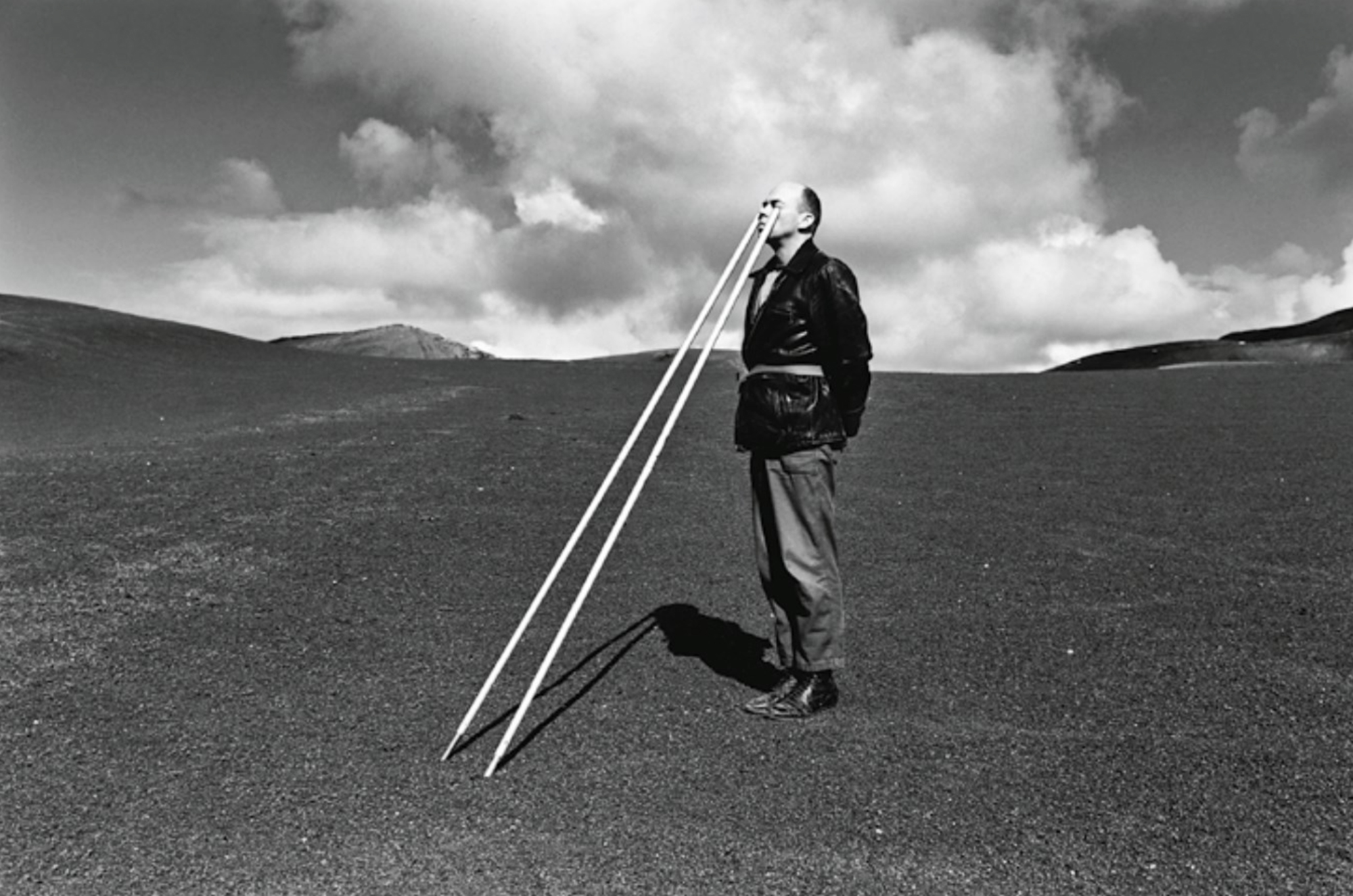
© ingolf thiel, self-portrait, 1985
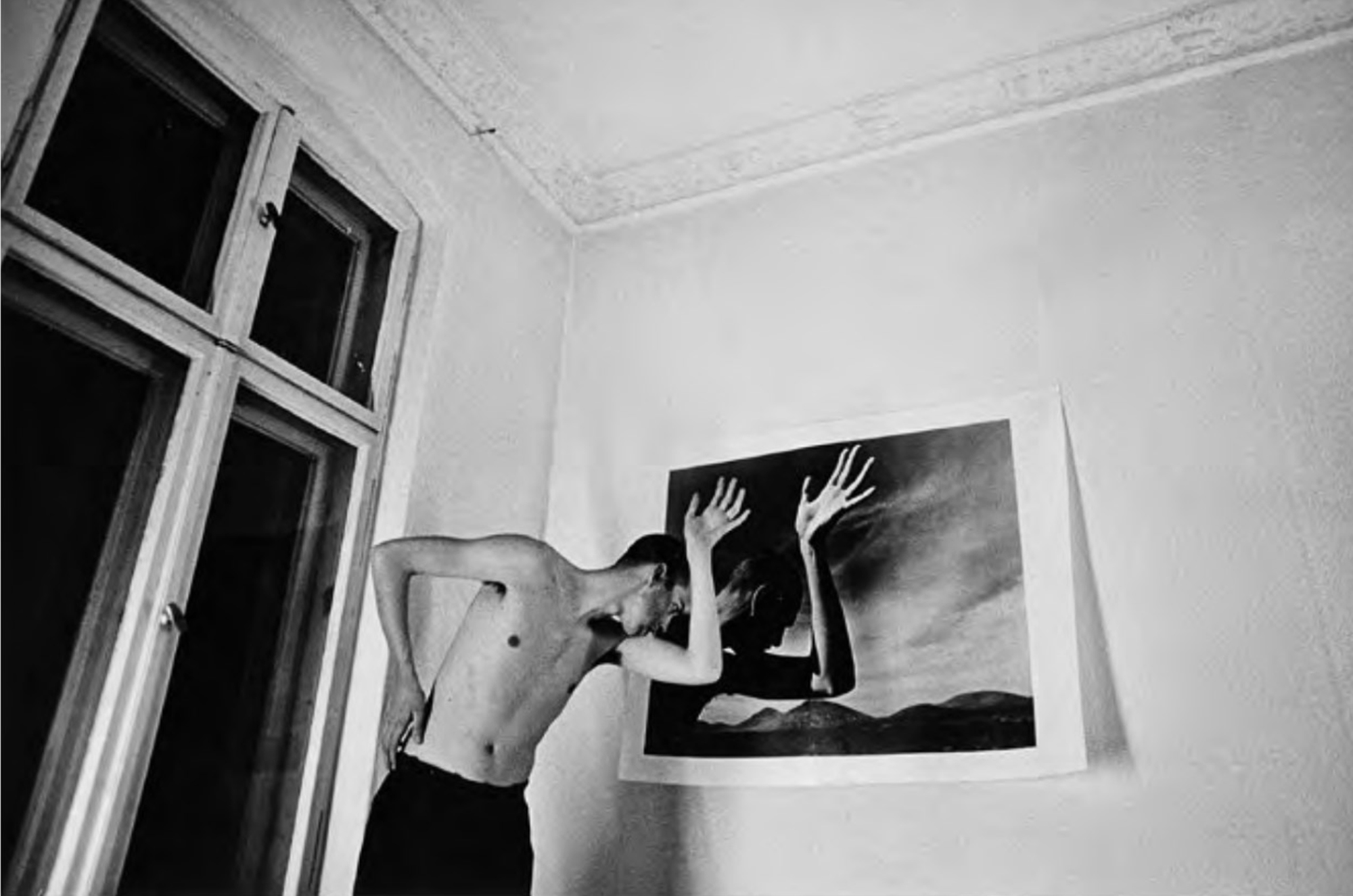
© ingolf thiel, rolf s. wolkenstein, 1984
© rolf s. wolkenstein, staglit, 1984 – the role of the model switches … photographed by ingolf thiel, the photographer now becomes model himself